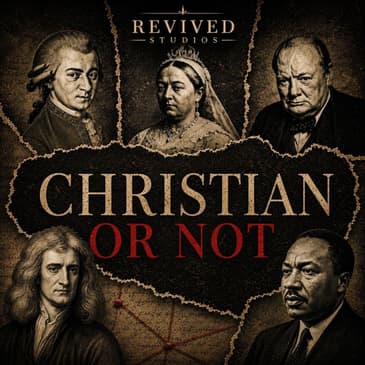
Charlemagne was the legendary King who united much of Europe, crowned Holy Roman Emperor, and spread Christianity by the sword.
But was he truly a Christian?
In this episode of Christian or Not, we examine Charlemagne’s faith, his brutal wars of conversion, his reforms, and the real tension between his ambition for power and his commitment to the Church.
A fascinating and complicated figure from church history that raises important questions about faith, politics, and violence.
Search “Christian or Not” on YouTube or your favorite podcast app for episodes on Isaac Newton, John D. Rockefeller, Sir Francis Drake, and more.
New episodes every two weeks.
What do you think about Charlemagne’s faith and methods? Drop your thoughts in the comments 👇
#Charlemagne #ChristianFaith #ChurchHistory #ChristianOrNot #HolyRomanEmpire
00:00 --> 00:03 [SPEAKER_00]: Christian or not is a production of Revive Studios.
00:05 --> 00:14 [SPEAKER_01]: there are moments in history where you can point to them and you can say this day, this moment right here, it changed everything forever.
00:15 --> 00:32 [SPEAKER_01]: And in everything that comes after that are not the same moments, it you purl harbor forever changed history because it was the moment America fully committed to entering World War II or for anybody alive more recently, a lot of them would say
00:35 --> 00:43 [SPEAKER_01]: A day that used to be more popular, that is not remembered as much anymore, is in the year 880 Christmas day.
00:44 --> 00:53 [SPEAKER_01]: And the reason that day was so important is it was the day that a king, not just a king, but an emperor is given a crown by the Pope.
00:53 --> 01:05 [SPEAKER_01]: re-establishing it used to be back in the ancient days, the the Emperor and the Pope, they worked together over the Roman Empire and they were co-raining co-leading.
01:05 --> 01:09 [SPEAKER_01]: But when the Roman Empire went away, that is that relationship fell apart.
01:09 --> 01:15 [SPEAKER_01]: And the power of Christianity over Europe went back and forth for a very long time.
01:16 --> 01:17 [SPEAKER_01]: And there was a very much a real moment where
01:19 --> 01:30 [SPEAKER_01]: Aryan Christianity would end up ruling maybe over Europe, or that nice Christiany would end up going off to Constantinople or Alexandria, Egypt, but it would be somewhere else instead.
01:31 --> 01:43 [SPEAKER_01]: But on that Christmas day, we see the Pope putting the crown on an Emperor's head and establishing a new quote unquote Holy Roman Empire.
01:43 --> 01:45 [SPEAKER_01]: And everyone has said it, this is nothing new.
01:45 --> 01:46 [SPEAKER_01]: It's not
01:48 --> 01:59 [SPEAKER_01]: but it represents a new era where the church and the state are working together to create a nice and Christianity, a Trinity Christianity that can represent something new.
01:59 --> 02:09 [SPEAKER_01]: It's a turning point in Europe where Christianity starts to go on the ascension, where it had been under so much tack by so many different forces for so long.
02:10 --> 02:14 [SPEAKER_01]: It changed and turned history and everything that fell
02:16 --> 02:17 [SPEAKER_01]: hinge on this moment.
02:17 --> 02:20 [SPEAKER_01]: We we can't go back and time to see what it would have looked like before.
02:21 --> 02:27 [SPEAKER_01]: This moment happened when the Pope put the crown on King Charlemagne's head, making him the emperor.
02:27 --> 02:35 [SPEAKER_01]: And for the next millennia plus every Christian that lived would have to deal with the question of what is it like to have a Christian king?
02:36 --> 02:38 [SPEAKER_01]: What are Christian kings supposed to be like?
02:38 --> 02:40 [SPEAKER_01]: What does it mean to rule over lands?
02:40 --> 02:41 [SPEAKER_01]: How do you
02:42 --> 02:45 [SPEAKER_01]: How do you both live as a Christian by the Bible?
02:45 --> 02:47 [SPEAKER_01]: Where does church and state power begin and in?
02:48 --> 02:51 [SPEAKER_01]: And these questions were around before that, but they took on a new light.
02:51 --> 02:53 [SPEAKER_01]: after Charlemagne.
02:53 --> 03:07 [SPEAKER_01]: Charlemagne built this amazing kingdom that made it safe for his brand of Christianity and the people of them to live and worship the faith and follow God within his kingdom in a way that they weren't safe before that.
03:08 --> 03:11 [SPEAKER_01]: The question we're asking on our show is
03:19 --> 03:23 [SPEAKER_00]: Hi, my name is Mark, my name is Troy about to take a sip.
03:23 --> 03:24 [SPEAKER_00]: Sorry, caught you off guard.
03:25 --> 03:29 [SPEAKER_00]: He just the whole intramonolog and then was got a little thirsty after that.
03:30 --> 03:31 [SPEAKER_00]: And this is Chris here or not.
03:31 --> 03:34 [SPEAKER_00]: And this is a show where we like we
03:35 --> 03:40 [SPEAKER_00]: Do this a little intro every time because we want to be really clear about this We talk about people from history.
03:40 --> 03:42 [SPEAKER_00]: We talk about you know we talked about new tin.
03:42 --> 03:46 [SPEAKER_00]: We've talked about Rockefeller John the Rockefeller.
03:47 --> 03:50 [SPEAKER_00]: We talked about Francis Drake extensively
03:50 --> 04:00 [SPEAKER_00]: And we talk about them, we go through their lives and we try to answer this question, where they're Christian, not well, Mark and Troy, are you trying to judge people then?
04:00 --> 04:02 [SPEAKER_00]: No, that's not up to us.
04:03 --> 04:05 [SPEAKER_00]: We can't see their hearts, only God can judge people.
04:06 --> 04:10 [SPEAKER_00]: But we do believe that we can see the fruits of what people are doing.
04:10 --> 04:18 [SPEAKER_00]: And that's kind of what this show is talking about this people saying, OK, but OK, if there were Christians or not, how did they live that out?
04:18 --> 04:19 [SPEAKER_00]: What was their theology?
04:19 --> 04:22 [SPEAKER_00]: If there's anything known, what do we see in the things that they do?
04:23 --> 04:43 [SPEAKER_00]: And then we talk about it, we try to give our own opinion, and then we also would love to hear your opinion as well, and we're going to do some comment episodes hopefully to just learn from these people in history to see like, okay, if they were Christian, what are things that were very different in the era that they lived in and what can we learn from them.
04:44 --> 04:47 [SPEAKER_00]: And yeah, so that's that's us that's the show.
04:52 --> 04:56 [SPEAKER_01]: What I thought we were launching and what we actually became ended up being different things.
04:56 --> 05:00 [SPEAKER_01]: So for example, we started to revive thoughts where we take sermons in the past and bring them back to life.
05:00 --> 05:06 [SPEAKER_01]: And I described it to everybody as it's a sermon podcast where we're taking these old sermons, but we also gave the back stories of the preacher.
05:06 --> 05:10 [SPEAKER_01]: So I thought so you could appreciate the sermon better.
05:10 --> 05:13 [SPEAKER_01]: What are we actually in upgrading was a church history podcast where we tell these amazing
05:13 --> 05:18 [SPEAKER_01]: stories and then we let you listen to the servant and the church history was the part that like everyone focused on.
05:18 --> 05:23 [SPEAKER_01]: The sermons are still great too, but it just was like the what we started with and what we actually create was different.
05:24 --> 05:30 [SPEAKER_01]: When we created the podcast Martyrs missionaries, well again, we thought we were doing was creating this amazing history story of all these Martyrs missionaries to
05:31 --> 05:35 [SPEAKER_01]: you know, just help you understand how great an amazing the church is.
05:35 --> 05:39 [SPEAKER_01]: And we did that, but we also accidentally created a really encouraging podcast.
05:39 --> 05:40 [SPEAKER_01]: It was accidentally.
05:40 --> 05:45 [SPEAKER_01]: We hoped it would be encouraging, but we've heard from so many people who are on the field overseas, especially.
05:45 --> 05:51 [SPEAKER_01]: And from others too, who are in ministry and in the being that we created that we, but at least what's the one I created.
05:51 --> 06:10 [SPEAKER_01]: a show that is like a it's just a cup of warm, you know, tea for these people struggling in ministry and overseas life and it'll be an encouragement to everyone today and then at least had the idea for this show and her original idea was like we need to, you know, figure out which or the way she envisioned it was like philosophers like which philosophers were actually Christians are not.
06:11 --> 06:13 [SPEAKER_00]: this turned into which people were Christian or not.
06:13 --> 06:26 [SPEAKER_01]: And I thought this would be like just a great history cataloging podcast where we look through all these different people and then you know, when people are talking about them, you can say, hey, Christian or not didn't episode on that to talk about whether they were Christian or not.
06:26 --> 06:27 [SPEAKER_00]: They would do just in my mind.
06:27 --> 06:29 [SPEAKER_00]: It would be this great useful resource for everybody.
06:30 --> 06:33 [SPEAKER_01]: And as we've done this now, we're on episode four and working through these scripts and stuff.
06:33 --> 06:36 [SPEAKER_01]: I was like, no, this is actually very much an episode.
06:37 --> 06:41 [SPEAKER_01]: You know, I was thinking of this as a history show, but it's very much at theology show.
06:41 --> 06:46 [SPEAKER_01]: We are digging into the lives of these people and asking, what does it look like to be a Christian?
06:46 --> 06:55 [SPEAKER_01]: And what would I expect to find in the fruit and lives of people who are claiming to be Christ despite the fact that their context is very different than mine?
06:55 --> 06:57 [SPEAKER_00]: What should I even from your Christian?
06:57 --> 07:01 [SPEAKER_01]: Just really quick Christian and the crisis in happens.
07:01 --> 07:17 [SPEAKER_00]: I said if I had I was seeing Christ followers and Christian and I took off followers in the Eastern and got a lot just I'd be Christ that that's another podcast that he were bouncing around like and we're now doing Christian not and maybe we're ever going to like a one-off episode like anti-Christ or not It's a Christ or not.
07:17 --> 07:22 [SPEAKER_01]: Oh, so hopefully we won't be here for 80 was the anti-Christ email that could be a really bad day And what?
07:23 --> 07:31 [SPEAKER_01]: Or we could be like, hey, we called it, you know, we've, we've, we've heard it on antichrist or not first should listen to us before you got those marks.
07:32 --> 07:34 [SPEAKER_00]: Well, anyway, we may have to cut this part from you.
07:34 --> 07:35 [SPEAKER_00]: So we may not, we'll see.
07:35 --> 07:36 [SPEAKER_00]: It's a case for you.
07:36 --> 07:42 [SPEAKER_01]: I, Charlotte Maine, aka Charlotte Charles the Great, um, tell me out.
07:43 --> 07:45 [SPEAKER_01]: Is looming mean the Great.
07:46 --> 07:47 [SPEAKER_00]: Um, yes, so it does.
07:47 --> 08:00 [SPEAKER_00]: Um, so his name is Charlemagne, as you say in English, and you sort of make it one thing Charlemagne, but it is actually, uh, in French, you would say Charlemagne and Le Manieu means the great.
08:00 --> 08:05 [SPEAKER_00]: So I share Charles sort of gets Christmas Le Manieu everyone.
08:05 --> 08:07 [SPEAKER_01]: No, I said this is a great croissant.
08:08 --> 08:18 [SPEAKER_00]: No, that would mean the great croissant like or croissant the great like so if I said La Mania croissant it's it's all right croissant.
08:18 --> 08:30 [SPEAKER_00]: There's different types of great like you have like great as in the title Which is this one and like this is a great croissant like or say mine you feel like it's like the it's magnificent like Somewhere and my friend isn't that great.
08:30 --> 08:31 [SPEAKER_01]: So I know you golly.
08:31 --> 08:35 [SPEAKER_01]: I'm sure nobody's thinking right now mark your French is the problem on this episode
08:36 --> 08:48 [SPEAKER_01]: I assure you that's not what they're thinking, but I just want to clarify it because when I see things like this, because for example, the great here is an English title, but I can also say that's a great croissant and you would exactly know what I mean.
08:48 --> 08:53 [SPEAKER_01]: So in my mind, I'm like, okay, I don't think I can use the domain as helpful to me.
08:53 --> 08:55 [SPEAKER_01]: He's born to a very famous family.
09:01 --> 09:02 [SPEAKER_00]: That's his grandfather, actually.
09:02 --> 09:04 [SPEAKER_00]: Yeah, I read your favorite father.
09:04 --> 09:07 [SPEAKER_00]: You said father because his father probably was humbling on my husband.
09:07 --> 09:09 [SPEAKER_00]: They resound the best names of all.
09:09 --> 09:10 [SPEAKER_01]: So I do apologize.
09:10 --> 09:11 [SPEAKER_01]: I, that's my second stumble here.
09:11 --> 09:12 [SPEAKER_01]: We'll see where we go from here.
09:13 --> 09:15 [SPEAKER_01]: But Charles the hammer is grandfather.
09:15 --> 09:16 [SPEAKER_01]: I thought that's what I said.
09:17 --> 09:17 [SPEAKER_01]: Amazing.
09:17 --> 09:18 [SPEAKER_01]: What a nickname.
09:18 --> 09:19 [SPEAKER_01]: You want that one, right?
09:19 --> 09:20 [SPEAKER_01]: That's the one.
09:20 --> 09:21 [SPEAKER_00]: That's all it means.
09:21 --> 09:23 [SPEAKER_01]: And he didn't earn an ear in it.
09:23 --> 09:29 [SPEAKER_01]: He united these different Frankish tribes kind of under one banner and into the civil war.
09:30 --> 09:44 [SPEAKER_01]: and after he did that he then had to stop the muslim invasion at the battle tours in 732 he succeeds it look history is written in different ways the muslims kind of write this history as like you know it was a small skirmish it wasn't important
09:45 --> 09:47 [SPEAKER_01]: they had what they wanted to spend in Portugal.
09:47 --> 09:49 [SPEAKER_01]: This was no big deal to them.
09:49 --> 09:56 [SPEAKER_01]: In French history, not so much, it's basically like this was do or die and the Europe entire history was on the line.
09:56 --> 10:00 [SPEAKER_01]: It is amazing to me if you've never done a lot of research on this.
10:00 --> 10:03 [SPEAKER_01]: As we've done more research, just two years of this kind of podcast dance stuff that we've done.
10:04 --> 10:09 [SPEAKER_01]: I, in teaching, I never realized just how many times Europe almost became Muslim.
10:10 --> 10:11 [SPEAKER_01]: The battle of tours happened.
10:11 --> 10:16 [SPEAKER_01]: There was this time in like the 1600s but a bunch of Polish nights stopped in Muslim army.
10:17 --> 10:18 [SPEAKER_01]: It was going on near the reformation.
10:18 --> 10:20 [SPEAKER_01]: The Catholic Church was holding them off at Vienna.
10:21 --> 10:23 [SPEAKER_01]: I mean, it is actually kind of fast.
10:23 --> 10:23 [SPEAKER_01]: I like that fast.
10:23 --> 10:24 [SPEAKER_01]: I was kind of scary.
10:24 --> 10:29 [SPEAKER_01]: Really like how close the call to prayer came to me like a common state throughout Europe.
10:34 --> 10:51 [SPEAKER_00]: Yeah, if those had been successful, no absolutely and it's almost painful to see how it is changing right now How Europe is not the Christian kingdom any more that it's Charlemagne Imagine like yeah, actually just coming back on his name.
10:51 --> 10:54 [SPEAKER_00]: I was I just had a thought about because I think
10:55 --> 11:03 [SPEAKER_00]: Like we have these names like Charlemagne and English, Charles DeGrade, guy with a quote in Dutch, which also means just the grade, like it's all the same.
11:04 --> 11:09 [SPEAKER_00]: But he would actually have a Latin name and someone's going to correct me if I do this wrong.
11:09 --> 11:14 [SPEAKER_00]: But I think it was something like Garola's Machnus Rex.
11:14 --> 11:15 [SPEAKER_00]: So that was like his full name.
11:15 --> 11:18 [SPEAKER_00]: Because of course, you don't get boring Charles DeGrade.
11:18 --> 11:19 [SPEAKER_00]: Like you had to earn that.
11:20 --> 11:22 [SPEAKER_00]: Like you can just, you know, be boring and be like,
11:23 --> 11:29 [SPEAKER_00]: I do feel they gave names at birth, but those were usually like very like offensive descriptive names.
11:29 --> 11:35 [SPEAKER_01]: For example, his dad's name, which I don't know if it was given at birth, but like it was peppy.
11:35 --> 11:36 [SPEAKER_01]: Well, his mom's name.
11:36 --> 11:41 [SPEAKER_01]: So Charles the Great's mom is Bertrata, but she was known as Bigfoot
11:49 --> 11:52 [SPEAKER_01]: Like, can you call her big foot further?
11:52 --> 11:54 [SPEAKER_00]: It must have been the king, but that's even worse.
11:54 --> 12:01 [SPEAKER_00]: Like, the only guy that can give the queen a nickname must be the king, but if it's the king calling his wife big little person, that's even worth it.
12:01 --> 12:02 [SPEAKER_01]: Tells they fit the company here.
12:02 --> 12:04 [SPEAKER_01]: I mean, that's rough, man.
12:05 --> 12:09 [SPEAKER_01]: Unless we think this was a descendant from the line with a big feet, like, you know, of the big foot.
12:09 --> 12:10 [SPEAKER_01]: Phenomenon.
12:11 --> 12:12 [SPEAKER_01]: I don't think so.
12:12 --> 12:13 [SPEAKER_01]: We're not that podcast, so I'm gonna say no.
12:13 --> 12:15 [SPEAKER_00]: like let's let's just say like this.
12:16 --> 12:21 [SPEAKER_00]: They didn't have like the low-risk cameras that big footage usually filmed the part as filmed with.
12:21 --> 12:25 [SPEAKER_00]: So maybe it was like a really shaky painting or something like a shaky painting.
12:25 --> 12:27 [SPEAKER_01]: Then she's in the background of it.
12:27 --> 12:28 [SPEAKER_01]: That's gonna add a lot of evidence.
12:29 --> 12:32 [SPEAKER_01]: All right, so then we have his dad also not the best thing named Peppethish Short.
12:33 --> 12:33 [SPEAKER_00]: Great first name though.
12:34 --> 12:37 [SPEAKER_01]: Yeah, I would imagine you would say that you want to tell the audience why you said that.
12:38 --> 12:42 [SPEAKER_00]: So in Dutch, Pappin is Pappin and that is my son's name.
12:42 --> 12:43 [SPEAKER_00]: We love that name.
12:43 --> 12:44 [SPEAKER_00]: It's actually kind of cool.
12:44 --> 12:47 [SPEAKER_00]: It's like a really medieval name.
12:47 --> 12:49 [SPEAKER_00]: It is still happening in the Netherlands.
12:49 --> 12:50 [SPEAKER_00]: So it's cool.
12:50 --> 12:51 [SPEAKER_00]: His name is Pappin.
12:51 --> 12:54 [SPEAKER_00]: Or Pappin in English because he goes to international school in Indonesia.
12:55 --> 12:56 [SPEAKER_00]: So he goes by Pappin here.
12:57 --> 12:59 [SPEAKER_01]: Yeah, it's a pretty I think it's a great name.
12:59 --> 13:02 [SPEAKER_01]: Um, actually, I will say I do think my son always calls him a pint.
13:02 --> 13:03 [SPEAKER_01]: I don't think my son.
13:03 --> 13:04 [SPEAKER_01]: Yeah, I know does actually have it.
13:04 --> 13:05 [SPEAKER_00]: That's actually good.
13:05 --> 13:18 [SPEAKER_00]: Like that's a little bit of our a Dutch thing and the Dutch people are then like yeah, we know that's what we do like we were a small country like we learn English from a young age and we sort of adapt to the other countries like
13:19 --> 13:40 [SPEAKER_00]: like we actually had this discussion the other day where you were talking about like how in America sometimes like news report is when they say Spanish name suddenly they just go into a flawless, not flawless, Spanish accent to pronounce the Spanish name and friends in the Netherlands it's actually more common to do that with like
13:40 --> 13:42 [SPEAKER_00]: like German names or French names.
13:43 --> 13:47 [SPEAKER_00]: Like there's even cities that we just know by their French name and we would pronounce by their French name.
13:47 --> 13:49 [SPEAKER_00]: There's cities that we don't do for it as well.
13:51 --> 13:55 [SPEAKER_00]: But for us, it's more common to use the different language that are around us.
13:55 --> 13:57 [SPEAKER_00]: So we change our names as well.
13:57 --> 13:59 [SPEAKER_00]: Like my name, I say here, hey, my name's Mark.
13:59 --> 14:00 [SPEAKER_00]: This is Christian, or not.
14:00 --> 14:02 [SPEAKER_00]: While in Dutch, I would say my name is Mark.
14:03 --> 14:05 [SPEAKER_00]: So we roll the R a little bit more.
14:06 --> 14:18 [SPEAKER_00]: So, we do the same for kids and because we already sort of knew when we were expecting our first That we would probably not be living in the Netherlands our whole life.
14:18 --> 14:29 [SPEAKER_00]: We pick names that would translate to English as well And we keep saying them but it has actually happened to me sort of we're drifting again My wife her she has a very Dutch name.
14:29 --> 14:33 [SPEAKER_00]: So do people that have ever met a Dutch person will know that we have a lot of
14:33 --> 14:34 [SPEAKER_00]: in our language.
14:35 --> 14:47 [SPEAKER_00]: Her name is Karayana and here in Indonesia, because that's a hard name to say because there's, and there's the, in the, and a rolling R. So, Karayana people struggle with that name, some people.
14:48 --> 14:50 [SPEAKER_01]: I, one of them is sitting in this room with you right now.
14:50 --> 14:51 [SPEAKER_01]: So,
14:51 --> 15:10 [SPEAKER_00]: that is true and she goes by Anna sometimes here and now or in Indonesian Anna because it's again the Indonesian pronounce it one time I was talking to someone and he just mentioned oh yeah and I told me someone Anna who's Anna who's Anna who's Anna like I know people I don't know and Anna is like you're wife right
15:12 --> 15:12 [SPEAKER_00]: Oh, right.
15:12 --> 15:23 [SPEAKER_00]: So, so it's good actually like I keep using names differently, but when you say you're a son who's in the same class, the pain if he calls in the pain and I should probably start calling in the pain as well.
15:23 --> 15:26 [SPEAKER_01]: It was actually with through a thought that you're all right.
15:26 --> 15:26 [SPEAKER_01]: We are off track here.
15:26 --> 15:33 [SPEAKER_01]: That's okay, though, because I remember when we first moved here Ezra kept talking about the pain, but we get hearing you guys call in pep and.
15:33 --> 15:39 [SPEAKER_01]: So then we were trying to call him Pepin to be like, well, match the parents, and then eventually we realized, no, we should call him Pepin.
15:39 --> 15:44 [SPEAKER_01]: But it was like a bag of boards, we were like, we were trying to like match you guys, like we'll call him by the name of his parents or call him.
15:44 --> 15:45 [SPEAKER_01]: And eventually we were like, actually it's fine.
15:46 --> 15:48 [SPEAKER_01]: So anyway, that's it, but don't worry.
15:48 --> 15:50 [SPEAKER_01]: I'm not, Ezra has never called him Pepin the short.
15:50 --> 15:55 [SPEAKER_01]: So he's, he's sat from that nickname that poor charlomains that got.
15:55 --> 15:57 [SPEAKER_00]: I do feel in first grade.
15:57 --> 16:00 [SPEAKER_00]: We should be stopping them from making nicknames because they will probably not be good.
16:00 --> 16:02 [SPEAKER_00]: Like, we'll get some more big foods out of there.
16:02 --> 16:04 [SPEAKER_01]: Maybe that's where big food brother got.
16:04 --> 16:06 [SPEAKER_01]: Like, in first grade, her fever huge.
16:06 --> 16:08 [SPEAKER_01]: And at some point, it just stuck for a thing.
16:08 --> 16:11 [SPEAKER_00]: Poor Bertha, I feel sorry for her.
16:11 --> 16:13 [SPEAKER_01]: There's also some other, and I can't remember the mall.
16:13 --> 16:19 [SPEAKER_01]: It's not my head, but in his family line, there was like one, like later on, not Charlemagne, but like either his kids or own kids.
16:19 --> 16:23 [SPEAKER_00]: Yeah, the next one is called Peppin' to Hindsbeck, like hunt of houseguards.
16:23 --> 16:37 [SPEAKER_01]: Peppin' to Hindsbeck is called, and I think there's like a Charles or something the ball as well, so like it was like every other, and it really felt like it was every other name, was either great and terrible, and it just seemed like, okay, you've got to suck with the ball, or you've got to suck with the simple, or you've got to suck with the hunchback.
16:38 --> 16:59 [SPEAKER_01]: a rough any rough to that you go down in history for probably the thing you're most insecure about like you know what I mean like a uh... you know i i i don't i can't do know what that would be for me but could you imagine you know you're so is it the acne face or something like that that's that's what thing you want to be remover no it's you want to be the great like you want that nickname of being the very very very hammer those kind of
17:00 --> 17:04 [SPEAKER_01]: Alright, we've been an enormous amount of time talking about Charlie Mames name.
17:04 --> 17:09 [SPEAKER_01]: I do apologize, but I also feel like it was a perfectly acceptable side street to go down.
17:09 --> 17:11 [SPEAKER_01]: Now, he's difficult.
17:12 --> 17:12 [SPEAKER_01]: He's difficult to explain.
17:13 --> 17:16 [SPEAKER_01]: As a person, I, I, I, I,
17:17 --> 17:19 [SPEAKER_01]: like he, okay, so he's social-able.
17:19 --> 17:23 [SPEAKER_01]: Like if you met him, he would be chatting with you, he would be interested in with you.
17:23 --> 17:35 [SPEAKER_01]: He might challenge you to a swimming bath contest, where you're at his pool at a Roman bath style bath house, so I guess they rebuilt and got up and going, and he'd want to swim back and forth with you.
17:36 --> 17:40 [SPEAKER_01]: Well, it is such a random thing to think about, like, this leader, but he loved these swimming audacity.
17:40 --> 17:45 [SPEAKER_01]: Get his guys in there and they would swim back and forth across the pool, having fun, I guess.
17:46 --> 17:50 [SPEAKER_01]: He was known for being gluttonous and throwing parties that were a lot of fun.
17:51 --> 17:57 [SPEAKER_01]: He was tall, handsome, but maybe going along with his gluttony, considered a tad bit overweight.
17:57 --> 18:03 [SPEAKER_01]: But no, like enormous, now he wouldn't have gone into history books as the fat, just if you'd look at him and you'd go,
18:03 --> 18:06 [SPEAKER_00]: You know, I see you put on the Christmas 15 kind of thing.
18:07 --> 18:11 [SPEAKER_01]: He changed Rome, and I don't mean the Holy Roman Empire.
18:11 --> 18:12 [SPEAKER_01]: I mean actual Rome forever.
18:13 --> 18:23 [SPEAKER_01]: He took over the area Northern Italy and Rome, and at the time of his being controlled by a group called the Lombards, he could have made that French territory.
18:23 --> 18:28 [SPEAKER_01]: He could have said, I am the Holy Roman Empire Emperor, and I own Rome, or he could have just said,
18:30 --> 18:36 [SPEAKER_01]: Um, he doesn't instead he gives it to the pope and gives them back their lands and says like, hey, you should run this area.
18:37 --> 18:38 [SPEAKER_01]: I don't want it to.
18:38 --> 18:48 [SPEAKER_01]: I don't want to step on your toes, which I think really challenges the perspective that Charlemagne was just in it for power and greed and making an aim for himself.
18:48 --> 18:58 [SPEAKER_00]: Yeah, no, I think I think you're correct there because it's good to know like of course, and those times it was like you inherited the empire from your father.
18:58 --> 19:13 [SPEAKER_00]: So in this case, Pepin the short and one point gave the empire to his two sons, Charlemagne had a brother and they were supposed to run it together, but they had a falling out, so it was mostly Charlemagne doing the work.
19:14 --> 19:15 [SPEAKER_00]: And the brother passed away after
19:16 --> 19:19 [SPEAKER_00]: Yeah, he sort of got hand at the entire empire.
19:19 --> 19:20 [SPEAKER_00]: So it was split between him and the brother.
19:21 --> 19:29 [SPEAKER_00]: Then he got the whole empire, but there was never like I feel like a very strong expansion just for the sake of expansion.
19:29 --> 19:30 [SPEAKER_00]: Yeah, with him.
19:31 --> 19:31 [SPEAKER_00]: That is true.
19:31 --> 19:31 [SPEAKER_00]: Yeah.
19:31 --> 19:53 [SPEAKER_01]: he net like in which is a big deal because if we want to go through world history leaders that intentionally built a giant empire to build a giant empire I mean we're talking Alexander the Great we're talking James, we're talking almost everybody when you get to Charlemagne he's getting land back to people he builds a big empire but he's also giving land back and there and nothing would have solidified his power more
19:54 --> 19:57 [SPEAKER_01]: than to have the Pope and all of Northern Italy to his land.
19:57 --> 20:01 [SPEAKER_01]: I mean, it would take another one of those history changing things.
20:01 --> 20:03 [SPEAKER_00]: Like he was like, no, I'm not going to do that.
20:03 --> 20:06 [SPEAKER_01]: I'm going to let the church have that land and let the Pope have that land.
20:06 --> 20:08 [SPEAKER_01]: That feels right to me.
20:08 --> 20:16 [SPEAKER_01]: And that really how many, I winded Alexander the great ever give a country up right winded winded Napoleon ever say take that land back, you know.
20:17 --> 20:34 [SPEAKER_01]: they took lands and they held these lands because they were trying to make a name for themselves to be fair that I think Napoleon actually did give her own back to, oh, so you know what that one actually might not qualify, but in the rest of them, okay, he made a future in that in the future episode, and he would be an interesting Christian of not.
20:34 --> 20:37 [SPEAKER_00]: All right, so let's do this, okay, countries he would fight the carve out of his empire.
20:38 --> 20:51 [SPEAKER_01]: um, Saxons, the English, you kind of a group that will eventually go over there, Spain, uh, the actual Britons, uh, the Huns, whom it seems like they were in Europe and had them there for hundreds of years.
20:51 --> 20:54 [SPEAKER_01]: He completely eradicate some out of Europe.
20:54 --> 20:56 [SPEAKER_01]: There will be no Huns after he's done with them.
20:57 --> 21:04 [SPEAKER_01]: Daines would sail in and attack this part of the world on like pirate ships so he would run them out of town as well.
21:04 --> 21:06 [SPEAKER_01]: I didn't know that they seem to be pirates.
21:07 --> 21:08 [SPEAKER_01]: It didn't save Vikings.
21:09 --> 21:11 [SPEAKER_01]: But I would imagine this would also be the era.
21:11 --> 21:13 [SPEAKER_01]: Are we getting close to the Vikings that they come around to?
21:13 --> 21:17 [SPEAKER_01]: So I would imagine he's getting into some tips for those guys on some level as well.
21:18 --> 21:22 [SPEAKER_01]: On the one hand, he did things that we wouldn't agree with.
21:22 --> 21:28 [SPEAKER_01]: And I think the biggest controversial thing, like when I was looking in Google and like, okay, which Charlemagne be a Christian?
21:28 --> 21:29 [SPEAKER_01]: He fights all these people.
21:30 --> 21:31 [SPEAKER_01]: He builds his empire.
21:31 --> 21:34 [SPEAKER_01]: He does the classic kingly things that we see him do.
21:34 --> 21:36 [SPEAKER_01]: But one thing he does that's extremely different.
21:36 --> 21:37 [SPEAKER_01]: That hasn't been done before.
21:38 --> 21:41 [SPEAKER_01]: Is when he takes over your land, he then says, you have a couple options.
21:42 --> 21:43 [SPEAKER_01]: You can leave.
21:43 --> 21:45 [SPEAKER_01]: I do believe that was always on the table.
21:48 --> 21:50 [SPEAKER_01]: or you can die, like you can fight and die.
21:51 --> 21:57 [SPEAKER_01]: But if you stay, you're gonna be baptized as a Christian now because we're not having a non-Christian kingdom.
21:57 --> 22:00 [SPEAKER_01]: Like there are plenty of places you can go be non-Christian all over.
22:01 --> 22:02 [SPEAKER_01]: There are lots of pagans in Europe.
22:03 --> 22:04 [SPEAKER_01]: There are lots of those.
22:04 --> 22:08 [SPEAKER_01]: There are these kind of barbarian people who kind of put Jesus in there like next to Thor.
22:09 --> 22:10 [SPEAKER_00]: It was a kind of Aryan thing going on.
22:10 --> 22:15 [SPEAKER_01]: very common at that time, but in the kingdom that he was building, there's a trinity.
22:16 --> 22:20 [SPEAKER_01]: Jesus is God and you're either going to baptize it with us in Rome or you're out of here.
22:21 --> 22:35 [SPEAKER_00]: And I think that's something that I didn't know as much about before we started researching, Charlemagne, but I think that's a very important point to making, because it wasn't that, like, all of these barbearing tribes were not Christian.
22:35 --> 22:42 [SPEAKER_00]: Actually, many of them would actually qualify in a certain way as adhering to some kind of Christianity.
22:42 --> 22:47 [SPEAKER_00]: But none of them were actually acknowledging Jesus as God.
22:47 --> 22:56 [SPEAKER_00]: So they would bid into the Aryan School of Christianity or Aryan Heresy, Christianity just to put it correctly.
22:56 --> 22:58 [SPEAKER_01]: It was like, we got a layer of fires here.
22:58 --> 22:58 [SPEAKER_01]: We're not Aryan.
22:58 --> 23:00 [SPEAKER_01]: We don't think Aryans have as good.
23:00 --> 23:05 [SPEAKER_01]: So like these, but they acknowledge that a lot of them acknowledge they have been around since Roman days.
23:05 --> 23:07 [SPEAKER_01]: Like they had heard about Jesus.
23:07 --> 23:10 [SPEAKER_01]: They just slid Jesus in their next the Thores.
23:10 --> 23:11 [SPEAKER_01]: Like one other God out there to deal with.
23:12 --> 23:16 [SPEAKER_01]: the idea that he's the god that he was man and god that he died.
23:16 --> 23:36 [SPEAKER_01]: They heard about the cost or I would imagine it at something in your area with it, but it was just it wasn't the Christianity we acknowledge, but the reason part of the reason we acknowledge this Christianity is the truth, but also because of what Charlemagne did, he made created a beachhead in Europe for it to survive as it had been on the ropes for a while.
23:37 --> 23:39 [SPEAKER_00]: Yeah, and that's that's very important.
23:39 --> 23:45 [SPEAKER_00]: So that's that's just keep going here in his in his biography.
23:45 --> 23:58 [SPEAKER_00]: You can already tell if you've been listening to the other episodes is once a little different because Charlie made like there's a lot of like and then he went there and he fought these people and then he went there and he found these people but history was a little less being documented there is a
23:59 --> 24:12 [SPEAKER_00]: one biographer like really close to his time to erode a biography that we drew a lot from, but this one might feel a little less chronological for you and a little bit more like he just go over some of the things that he did.
24:13 --> 24:14 [SPEAKER_00]: So let's keep going.
24:14 --> 24:21 [SPEAKER_01]: Yeah, we're just picking into you because we like I could see here's a and that's when he attacked the Vikings and that's when he attacked, you know, the galls with the air of the
24:21 --> 24:26 [SPEAKER_01]: But I don't feel like that's really what you were eyeer looking for is an ancient history lesson from 13 years ago.
24:27 --> 24:30 [SPEAKER_01]: We're trying to figure out, well, was he a Christian or not?
24:30 --> 24:35 [SPEAKER_01]: A nice Christian, he did not have a lot of strong points at that time in Europe where it was doing pretty well.
24:36 --> 24:39 [SPEAKER_01]: And this will change forever after the Holy Roman Empire.
24:39 --> 24:44 [SPEAKER_01]: Now, when all the words in fighting are done, Charlemagne wasn't just fighting and killing his enemies.
24:44 --> 24:46 [SPEAKER_01]: And by the way, it's hard also not to mention,
24:50 --> 24:54 [SPEAKER_00]: the idea of either you convert leave or die.
24:55 --> 25:03 [SPEAKER_01]: It does sound a little um there is another faith that has a similar track record in history and the lot of us would say that's not a good thing to do.
25:04 --> 25:09 [SPEAKER_00]: So that is true but there is a point here to make and maybe you were going to make it later as well.
25:09 --> 25:09 [SPEAKER_00]: But
25:10 --> 25:24 [SPEAKER_00]: like we're not talking about like, um, these people are just, you know, hanging out, going about to be like, yeah, we're talking like potential, like, still child sacrifice, yeah, very pagan stuff happening.
25:24 --> 25:28 [SPEAKER_01]: I mean, in a lot of, and I it's really interesting to me on the sacrifice of the name because,
25:29 --> 25:49 [SPEAKER_01]: I read a lot of history texts a lot of stuff and I feel like in maybe I'm in current maybe you you you've heard this a ton growing up or something But I feel like a lot of European history tries to act like human sacrifice what even sacrifice like that sounds like something to happen far away But like we know that the windish people were probably doing it even as late as the 12 and 13 and 14 hundreds and they didn't live
25:50 --> 25:52 [SPEAKER_01]: I mean, they lived kind of off the side of Prussia.
25:52 --> 25:54 [SPEAKER_01]: That's not that far from where Charlemagne is.
25:54 --> 26:01 [SPEAKER_01]: It's certainly not outside the question that 700 years earlier, human sacrifice and stuff is happening in this side of the world.
26:01 --> 26:04 [SPEAKER_01]: And yeah, I feel like it's like Patkins were always just super nice.
26:04 --> 26:14 [SPEAKER_01]: You know, sure the Vikings are killing people and drinking out of the heads of their enemies, but like human sacrifice, that seems like these are brutal people to have as your neighbors.
26:14 --> 26:21 [SPEAKER_01]: What do you do with neighbors that kill tribes of people all the time destroyed the Roman Empire not that long ago?
26:21 --> 26:29 [SPEAKER_01]: They're not they're not neighbors that are nice to you and I think that we really have to be careful not to put our modern sensibilities on
26:29 --> 26:30 [SPEAKER_01]: Charlemagne is doing.
26:31 --> 26:52 [SPEAKER_01]: The reason we can feel comfortable and say I wouldn't do that is because a bunch of people who live before us did it to make it safe enough for us to save it That doesn't mean what they're doing is getting moral at morality is true I just isn't relativism you either can't it's the right thing of the wrong thing to do regardless of the time frame But it's just important to remind ourselves you aren't in his shoes your
26:53 --> 26:57 [SPEAKER_01]: Kingdom won't be destroyed by Vikings if you make the wrong decision.
26:57 --> 27:05 [SPEAKER_01]: Your people won't be slaughtered and led to a tree of Thor to be brutally murdered at a sacrifice like Boniface walked in on.
27:05 --> 27:07 [SPEAKER_01]: Like these aren't things you ever have to worry about.
27:08 --> 27:11 [SPEAKER_01]: And because you don't have to worry about that, you can sometimes distance yourself and say, wow,
27:11 --> 27:16 [SPEAKER_01]: that that seems really mean of you to say those things that you have to become a Christian that way.
27:16 --> 27:18 [SPEAKER_01]: But what is the option?
27:18 --> 27:20 [SPEAKER_01]: Let these people stay in continue.
27:20 --> 27:23 [SPEAKER_01]: Would you let these human sacrifices stay in continue?
27:23 --> 27:37 [SPEAKER_01]: You could even make the case that allowing them the option to be baptized and be Christian is actually a lot more merciful than maybe they deserve because certainly some of them have done some pretty awful things.
27:40 --> 28:01 [SPEAKER_00]: Yeah, no, no, that's that's good stuff and that's that's what you can expect here for Chris here and out because And yeah, we try to be tried to be as honest as we can and we just give our thoughts and we'd love to hear your thoughts in the comments as well So just shoot us a comment and we'd love to keep talking about this and we're gonna keep talking about Charlemagne because there's
28:02 --> 28:04 [SPEAKER_00]: definitely more to his, his bio that we need to talk about.
28:04 --> 28:12 [SPEAKER_00]: And there's his next thing that I see here in the script that I would love to hear from Troy about is something called the Carolingian Renaissance.
28:12 --> 28:18 [SPEAKER_01]: I so glad you pronounce that because I had to pronounce it in my head the Carolinian like north and south Carolina.
28:18 --> 28:20 [SPEAKER_01]: But I know that's not what it was.
28:20 --> 28:22 [SPEAKER_01]: So I appreciate you hitting that for me.
28:23 --> 28:27 [SPEAKER_01]: He, so one thing he's not remembered for as much, but he was very important
28:31 --> 28:32 [SPEAKER_01]: is a different era.
28:32 --> 28:50 [SPEAKER_01]: It's in the six, like in the sixth, like the 14, 1500s where, you know, art and culture and Greek, all these different things that were out of the past and new ideas and maybe even some bad ideas like humanism got mixed in, but it was this restoration of learning and art that was really important to European history and world history.
28:51 --> 29:00 [SPEAKER_01]: Well, as time has gone on, we've kind of historians and people have kind of identified a couple other similar moments where people suddenly got really interested in these kinds of things.
29:00 --> 29:01 [SPEAKER_01]: And this is one of them.
29:01 --> 29:14 [SPEAKER_01]: And the reason is because Charlemagne established schools and treated education as extremely important to what he was doing and trying to do, which is interesting because he could not read or write.
29:15 --> 29:18 [SPEAKER_01]: And also, he did not teach his own kids to read or write.
29:19 --> 29:21 [SPEAKER_01]: He taught the boys and the girls different things.
29:21 --> 29:27 [SPEAKER_01]: Tim is very important to the boys learn to run the sword and to fight with swords and know how to do that.
29:27 --> 29:30 [SPEAKER_01]: Because in his mind, they're going to be warriors like himself.
29:30 --> 29:32 [SPEAKER_01]: And the girls, they needed to learn to sew.
29:33 --> 29:35 [SPEAKER_01]: because they're going to be girls as the way he saw it.
29:35 --> 29:41 [SPEAKER_01]: And he didn't want his children being idle, so they had to learn, but that was what they had to learn, not those things.
29:41 --> 29:45 [SPEAKER_01]: Now, by the way, before you think, well, you know, what it was, you kind of tough on it, he loves his kids.
29:45 --> 29:50 [SPEAKER_01]: But he took them everywhere, including until like when he had battles and stuff, he was like, kids were like, oh, families coming.
29:50 --> 29:51 [SPEAKER_01]: We're all going to be there.
29:52 --> 29:53 [SPEAKER_01]: And that was finally outing.
29:54 --> 29:55 [SPEAKER_01]: A nice family outing.
29:55 --> 29:58 [SPEAKER_01]: Daddy's got to go kill and or baptize these people for a while.
29:59 --> 30:02 [SPEAKER_01]: girl's so boys pretend fight that'll be back or even a permit.
30:03 --> 30:04 [SPEAKER_01]: Now he had 17 kids.
30:05 --> 30:10 [SPEAKER_01]: So if if a king ever had a good excuse to not bring the whole posse, but he did come all.
30:10 --> 30:11 [SPEAKER_01]: You loved his kids.
30:11 --> 30:12 [SPEAKER_01]: He thought they were great.
30:12 --> 30:16 [SPEAKER_01]: And then you know, I've sure some of this when we contest and boy did him in the kids running back and web.
30:17 --> 30:18 [SPEAKER_01]: He did get better at studies.
30:18 --> 30:23 [SPEAKER_01]: He did eventually, I think, get to where he could kind of write writing was the one.
30:23 --> 30:31 [SPEAKER_01]: I think that I read that he always really struggled with, but he did, we could understand Greek, and he could speak and pray a little bit in Latin.
30:32 --> 30:37 [SPEAKER_01]: He enjoyed mass quite a bit, and he loved having books read to him while he ate.
30:38 --> 30:47 [SPEAKER_01]: One of his, and he loved like particularly religious books like his go to if I've got to eat and I want to you know We people I know people who put on TV when they eat or stuff like that.
30:47 --> 30:58 [SPEAKER_01]: I don't do that But I know people who do and for Charlotte main to put on TV was City of God like he's gonna have a St. Augustine's classic text A red to him how should a godly leader and people live in that city?
30:58 --> 31:02 [SPEAKER_01]: That's what he's gonna have So the same thing like I mean, it's pretty good stuff.
31:02 --> 31:04 [SPEAKER_01]: I like I like this aspect of his life.
31:04 --> 31:05 [SPEAKER_01]: I like what he's doing
31:07 --> 31:10 [SPEAKER_00]: We didn't there is an issue and we should get to it.
31:10 --> 31:34 [SPEAKER_01]: Yes, 17 children and the reason Yes, 17 children is not because his wife is a champ, but we should probably is Well one of them one of them is or yeah because he also had more than one wife and I got to be honest with you That's some weird one to me and he is actually one of the only European leaders that I can think of that has this like when we
31:34 --> 31:53 [SPEAKER_01]: Well, at least at the same time because we have people coming in later that divorce that sure Mary in, you know, in sequin Henry the age has his whole wife or wife issue, but in the case of Charlemagne like he's just married to two women like it sounds like old testimony like something from it.
31:54 --> 31:56 [SPEAKER_01]: I mean, David and Solomon like a sad style of thing.
31:57 --> 32:10 [SPEAKER_01]: And from what I could read and research, I feel like it was common in the Frankish tribes to do that they didn't see a problem with that I don't know if it was super common with the pagan tribes they lived amongst but I would imagine it probably was
32:12 --> 32:33 [SPEAKER_01]: what I feel like that tells you is how early Christianity, like how not spread into the land Christianity was that these kings are seeing this as a common idea because like when I think of okay so we think of having more than one wife David Livingston famously famous missionary goes to Africa he meets with different people all over Africa
32:34 --> 32:57 [SPEAKER_01]: And one of the biggest issues he has is all of these guys have more than one wife and the idea is do you fight this battle and cause these guys to give up their wives that can leave these poor you know women with no livelihood and it can be a really big like thing to get to that place but a flip side of it too is or do you just kind of preach the gospel and over time like society will correct itself.
32:58 --> 33:02 [SPEAKER_01]: and you will see them eventually give up multiple wives to live a more Christian life.
33:02 --> 33:06 [SPEAKER_01]: It's a totally debated thing, especially in areas where that is more common.
33:06 --> 33:12 [SPEAKER_01]: But I do think it tells us a lot about like what Christianity looks like in that part of the world.
33:12 --> 33:18 [SPEAKER_01]: And it's definitely not nearly as thoroughly thought out and rolled out and understood as we would have today.
33:18 --> 33:23 [SPEAKER_00]: I mean, in all fairness, it's, uh, give or take 12 on the 13 hundred years ago.
33:23 --> 33:27 [SPEAKER_00]: So yeah, there, there have been some developments, uh, we've moved along.
33:27 --> 33:27 [SPEAKER_00]: Yeah.
33:28 --> 33:28 [SPEAKER_01]: Yeah.
33:28 --> 33:30 [SPEAKER_01]: We've certainly, we've certainly written more books since then.
33:30 --> 33:31 [SPEAKER_01]: But it is a weird one.
33:32 --> 33:34 [SPEAKER_01]: And it is just an awkward thing that Charlemagne has going on.
33:34 --> 33:36 [SPEAKER_01]: We don't, in, in data to some credit.
33:36 --> 33:38 [SPEAKER_01]: We do, uh, he has 17 kids.
33:38 --> 33:41 [SPEAKER_01]: We don't see anywhere where he ever, I didn't read anywhere where he treats his wife's poorly.
33:42 --> 33:44 [SPEAKER_01]: I don't read anything where he's, you know, cruel to them.
33:45 --> 33:51 [SPEAKER_01]: It just seems that he has more than one of them, and that was common among the Frankish tribes during that time.
33:52 --> 33:53 [SPEAKER_01]: Um, some other stuff he did.
33:53 --> 33:56 [SPEAKER_01]: He's got some other just odd things.
33:56 --> 34:01 [SPEAKER_01]: For example, he got along really well with like the Muslim leader that was living south of him in Spain.
34:01 --> 34:07 [SPEAKER_01]: The same one, you know, this is the same area where Uh, his grandfather had, you know, hammered that line down a hammer down.
34:07 --> 34:09 [SPEAKER_01]: But he's get along pretty good with these guys.
34:09 --> 34:10 [SPEAKER_01]: They seem to be his friends.
34:11 --> 34:13 [SPEAKER_00]: And one of them he really became quite buddies with.
34:14 --> 34:29 [SPEAKER_01]: and he told him at one point he said what I've always wanted is an elephant like I think it I've read about these elephants I've heard they're cool but I want an elephant so bad and so this guy's like I'll get you an elephant and so I mean he would have had to work out some trade and stuff I mean just imagine getting that elephant on a ship
34:30 --> 34:33 [SPEAKER_01]: sailing it to Spain, how much that cost, how much effort that is.
34:34 --> 34:35 [SPEAKER_01]: But this guy got him an elephant.
34:35 --> 34:37 [SPEAKER_01]: It was like, yeah, got you your elephant in Charlotte.
34:37 --> 34:39 [SPEAKER_01]: And it's like, my elephant, this is amazing.
34:39 --> 34:42 [SPEAKER_01]: And I don't think, I mean, what up is art?
34:42 --> 34:45 [SPEAKER_01]: It just tells you that, like, he definitely got along with them pretty well.
34:45 --> 34:47 [SPEAKER_01]: They were on, I think a mutual respect, a little bit.
34:47 --> 34:50 [SPEAKER_01]: Like, we see your big Christian empire up there.
34:51 --> 34:53 [SPEAKER_01]: We respect and acknowledge that it's pretty powerful.
34:53 --> 34:54 [SPEAKER_01]: We get along.
34:54 --> 34:55 [SPEAKER_01]: So here's an elephant.
34:56 --> 34:56 [SPEAKER_01]: So,
34:57 --> 35:00 [SPEAKER_01]: Just so like that, really, I think gives you insight into his way of like operating the world.
35:00 --> 35:02 [SPEAKER_01]: I said he was social, well, and fun.
35:02 --> 35:07 [SPEAKER_01]: He's the kind of guy that if he's your neighbor and he wants to elephant, you want to get him an elephant.
35:09 --> 35:10 [SPEAKER_00]: I don't know what to say.
35:10 --> 35:29 [SPEAKER_00]: I'm just trying to imagine like the years like 800, something ish and like, like, okay, we have pictures, we have books, like our kids grow up like this and elephant, this and ostrich, this is flamingo, all these things that we would not see in the Netherlands necessarily, but they all know all the animals.
35:29 --> 35:32 [SPEAKER_00]: You know what, I don't know, like a lion looks like.
35:32 --> 35:33 [SPEAKER_00]: I have a zoo, don't you?
35:33 --> 35:47 [SPEAKER_00]: Yeah, we have zoos for us, but like just trying to make it like there's all these animals that aren't there and then you suddenly have an elephant like in what is now like Germany, Belgium like that area like yeah, there's an elephant like that must have been quite the attraction.
35:47 --> 35:57 [SPEAKER_01]: Oh, I'm sure it's A Muslim wild and I mean like it's big dangerous animal that as well like you know I was there like you don't have train places to stuff like that back then.
35:57 --> 35:58 [SPEAKER_00]: I mean it must have
35:59 --> 36:04 [SPEAKER_00]: I, I hope you got like some some zookeepers on how do you call like some caretakers with them.
36:04 --> 36:06 [SPEAKER_00]: Like how do you figure out how to take care of an elephant?
36:06 --> 36:13 [SPEAKER_01]: There's so many questions that he must have had, but also like think about how cool that would be to see an elephant.
36:13 --> 36:16 [SPEAKER_01]: Like you're the first person on your side of the world to see an elephant.
36:16 --> 36:38 [SPEAKER_01]: Yeah, maybe period says the woolly mammoth days and you're also like, and just to it's so for there's like these old medieval paintings if you've never seen them of like they were trying to draw a lion, but they had they were seeing what a lion like those are there's some of the ugliest things in the world, but you can't blame them that's probably what a lion would look like if you've never seen a lion and only read descriptions of a lion.
36:38 --> 36:39 [SPEAKER_01]: That's what you're going with.
36:39 --> 36:42 [SPEAKER_01]: So imagine what they're trying to figure out what an elephant looks like.
36:43 --> 36:45 [SPEAKER_01]: And then they finally see one and it's huge.
36:46 --> 36:54 [SPEAKER_01]: And remember, back then they don't have skyscrapers, cars and all the things we have, like this animal is huge wandering around, like the area of France.
36:54 --> 36:55 [SPEAKER_01]: That's just a fascinating thing.
36:56 --> 36:56 [SPEAKER_00]: That was really cool.
36:57 --> 37:06 [SPEAKER_01]: And it also kind of shows you, okay, look, like Charlemagne is baptizing these, you know, pagan barbarian groups into his land, and they would, by the way, sometimes reject him.
37:06 --> 37:09 [SPEAKER_01]: And so then he had to go back and re-baptize them.
37:09 --> 37:10 [SPEAKER_01]: So like, it could be a process.
37:11 --> 37:15 [SPEAKER_01]: It might take multiples of baptisms to get them to, like, or you can actually stick with your baptism this time or not, guys.
37:16 --> 37:38 [SPEAKER_01]: And I do believe he did sometimes like say I think I'm done baptizing this tribe get the swords guys So like he was not always a peaceful condess but he didn't clearly didn't just hate anybody was non-Christian He was on such good terms with the guy south of him the guy that his own grandfather You know had his family line and thought off that they're hanging out So it was not I didn't again I don't think it was that I hate these pagans.
37:38 --> 37:39 [SPEAKER_01]: I hate anyone who doesn't look like me
37:40 --> 37:42 [SPEAKER_01]: It doesn't think like me kind of thing.
37:42 --> 37:45 [SPEAKER_01]: I think it was just these are dangerous people in our lands.
37:45 --> 37:53 [SPEAKER_01]: They either need to get on board with what we're doing or they need to get out because we can't have a stable empire without him ruling inside.
37:53 --> 38:12 [SPEAKER_00]: Yeah, and I think that really touches unlike this, this most famous moment that you already described like that he gets crowned the Emperor of the Holy Roman Empire by the Pope so that so he is now for the first time really establishing this idea of like
38:13 --> 38:20 [SPEAKER_00]: being a monarch, being a ruler of the kingdom, but also that kingdom, therefore, being of a certain religion.
38:20 --> 38:25 [SPEAKER_00]: Like this is the first time this really gets done at least in Europe so clearly.
38:26 --> 38:29 [SPEAKER_00]: And like, okay, if you're within the borders of my empire,
38:31 --> 38:58 [SPEAKER_00]: your your Christian because we are a Christian King them and that is a very like you shared already a very pivotal moment so when you think about these tribes being within the borders like it's it's really take it or leave it like they actually take it or leave it or you know third option the sword so it's still take it to leave it we're just going to really enforce the lead at it we're going to make you leave like you didn't get a choice now if you chose leave it you didn't leave it
38:58 --> 39:13 [SPEAKER_00]: Yeah, so that's it's it's a very interesting thing and I think we're going to be talking about a little bit in a little bit when we really move over to like the part where we talk about like do we think he's a Christian or not, but there's
39:15 --> 39:41 [SPEAKER_00]: He did a lot for your, like, like we touched upon it a little bit, like, like this schools and he was also, actually, like, pushing for, like, you know, the monasteries to, to train more monks and people to get, like, religious training as well, like he would send people from his court to get, get, you know, like, some kind of theological training and, and I really like this, actually, like, like you already mentioned, like he has,
39:42 --> 40:01 [SPEAKER_01]: St. Augustine's a city of God read to him and like any chance he gets oh wait did you know it was it like France loved city of God If I remember in this correctly, it was France that tried like in the 400s so a little bit before this But I'm guessing it's like the ancestors of the franchise tries that tried to get Augustine
40:02 --> 40:04 [SPEAKER_01]: Like, officially canonized in the scripture.
40:04 --> 40:12 [SPEAKER_01]: Like, they were so convinced that Augustine was like, just above board that they were like, I think confessions and city of God is actually scripture.
40:12 --> 40:17 [SPEAKER_01]: And I mean, it forced the church to kind of like, it was one of the reasons why they had to affirm.
40:17 --> 40:20 [SPEAKER_01]: I mean, they were already had lots of, you know, fraud, leap, fraudulently written stuff.
40:20 --> 40:29 [SPEAKER_01]: It was another thing they had to affirm like, what makes somebody an apostle and are like, you know, able to write scripture and that was kind of like the one of the things they had to say is like, yeah, Augustine never walked with Jesus.
40:32 --> 40:36 [SPEAKER_01]: Um, I will say as somebody has read Augustine's Confessions and parts of City of God.
40:36 --> 40:37 [SPEAKER_01]: I do enjoy them.
40:38 --> 40:42 [SPEAKER_01]: I do think they were maybe, um, a little mistaken to put them on the level of scripture.
40:42 --> 40:48 [SPEAKER_01]: They are very interesting, re-reading, but like they're not quite there.
40:48 --> 40:52 [SPEAKER_01]: There's definitely a few step underneath the Lord's holy written words.
40:52 --> 41:11 [SPEAKER_01]: And but he doesn't want to my favorite quotes and confessions and of like any written work, which is like he's just he's the whole if you haven't read a commission since it's like an auto biography or obviously is going through his entire like and he's like I was a he was like at least talking about as a baby he's like as far as I know I was a baby like any other baby and everyone's told me I was
41:11 --> 41:19 [SPEAKER_01]: But eventually, I passed on from being a baby or should I say, it passed through me into a childhood.
41:19 --> 41:23 [SPEAKER_01]: And I'm like, what a bizarre way to describe.
41:23 --> 41:25 [SPEAKER_00]: I was a baby and I turned into a toddler.
41:25 --> 41:30 [SPEAKER_00]: This is like, you know, teacher says 800 words, and you need to like, embellish those anti-assus.
41:30 --> 41:34 [SPEAKER_00]: It really is like, okay, dude, like you think you're a little too detailed when you're like describing
41:35 --> 41:37 [SPEAKER_01]: being a baby for like two chapters when you don't even.
41:37 --> 41:39 [SPEAKER_01]: He's like, I don't remember this.
41:39 --> 41:41 [SPEAKER_01]: So I'm just giving you what I've heard about myself.
41:41 --> 41:43 [SPEAKER_01]: I'm like, of course you don't remember you to baby.
41:43 --> 41:43 [SPEAKER_01]: Nobody does.
41:43 --> 41:44 [SPEAKER_01]: I'll get seen.
41:45 --> 41:47 [SPEAKER_00]: But he heard rumors that I was.
41:47 --> 41:49 [SPEAKER_01]: But he also did say something that it still stood to stay.
41:49 --> 41:51 [SPEAKER_01]: It trips me up when I think about it.
41:51 --> 41:53 [SPEAKER_01]: So I drop it on you for the podcast and then we'll get back to Charlotte main.
41:53 --> 41:59 [SPEAKER_01]: But this thing is interesting that he's like, I love City of God and I'm like, you know, historically speaking, your entire region did.
41:59 --> 42:01 [SPEAKER_01]: And everybody does, but still.
42:02 --> 42:09 [SPEAKER_01]: But on Confessions, he also has this moment where he like, because he'll like tell his life story, and then for like 20 chapters, he starts talking about memories and how the brain works.
42:10 --> 42:17 [SPEAKER_01]: And at one point in the middle, like this long thing about memory and how the brain works, he's like, you know what's, I don't know how to describe it.
42:17 --> 42:21 [SPEAKER_01]: And I'm saying it so wrongly, anybody who's listening to this, the likes of Augustine's like, you're not giving him a scholarly do.
42:21 --> 42:24 [SPEAKER_01]: I'm sorry, but to me, he's just like, you know what's trippy?
42:24 --> 42:30 [SPEAKER_01]: It's like, you're brain forget something, but you know that you forgot it.
42:31 --> 42:33 [SPEAKER_01]: And he's like, where did the memory go?
42:33 --> 42:35 [SPEAKER_01]: But how can you know that you don't have it anymore?
42:36 --> 42:42 [SPEAKER_01]: And he's like, in the way described as like, if you forget someone's name, you know what their name is.
42:44 --> 42:46 [SPEAKER_00]: And I'm like, that's actually really weird, though.
42:46 --> 42:49 [SPEAKER_01]: Like, if I forget that person's name, I know their name isn't George.
42:49 --> 42:50 [SPEAKER_01]: I know their name isn't John.
42:50 --> 42:51 [SPEAKER_01]: I know their name isn't Stephen.
42:51 --> 42:57 [SPEAKER_01]: I just don't remember what their name actually is, which means somehow my brain can forget something, but still hold on to enough of it to not forget it.
42:58 --> 42:59 [SPEAKER_01]: And that's so weird.
43:00 --> 43:06 [SPEAKER_01]: Finally, that for you, listener, to deal with that confusing aspect of reality, that Augusti left on me.
43:06 --> 43:08 [SPEAKER_00]: Well, thank you, Troy, for, you know.
43:09 --> 43:10 [SPEAKER_01]: confusing me right now.
43:10 --> 43:12 [SPEAKER_00]: It's a very deep thought.
43:12 --> 43:15 [SPEAKER_00]: I wonder if Charlemagne read this.
43:15 --> 43:16 [SPEAKER_01]: These are the kinds of me.
43:16 --> 43:20 [SPEAKER_01]: He had while you didn't get her that he would sit there and ponder for sure.
43:20 --> 43:26 [SPEAKER_00]: Oh man, I think I his soup would go cold and he would just be staring in the distance and he would was super by 80.
43:26 --> 43:29 [SPEAKER_01]: I know what it's not but I don't remember what it was any more because it's cool.
43:29 --> 43:30 [SPEAKER_01]: All right, you know what?
43:30 --> 43:32 [SPEAKER_01]: I think it was he a Christian, let's do my dive in.
43:39 --> 43:50 [SPEAKER_00]: So you've heard it, a bit of a biography, some tidbits, some facts about Charlemagne's life, and now, was he a Christian or not?
43:51 --> 43:58 [SPEAKER_00]: And I feel like we end up in this place a lot where, like, for his day, you know, for his age.
43:58 --> 44:02 [SPEAKER_00]: And that's, we don't always want to give that a sort of like a, a, a, a,
44:02 --> 44:07 [SPEAKER_00]: Like, either too, like, this came on, you know, for his age, everyone was a Christian.
44:07 --> 44:10 [SPEAKER_00]: Oh, for the knowledge they had everyone really qualified.
44:11 --> 44:20 [SPEAKER_00]: I definitely not, like, you will see people on our podcast that you have thought they were Christian and they were not, as far as we're, I've seen a little bit of who is coming up.
44:20 --> 44:24 [SPEAKER_01]: I know for a fact, one person is going to be ranked as not a Christian in my vote.
44:24 --> 44:25 [SPEAKER_00]: At least by you.
44:25 --> 44:28 [SPEAKER_00]: So that's, yeah, you, little spoiler, I know, no spoiler.
44:29 --> 44:32 [SPEAKER_00]: Actually, a teaser for you, if you want to listen in the future.
44:32 --> 44:42 [SPEAKER_00]: Uh, but sure on the main, um, like the convert or die by the sword, so that is, I think a big stick.
44:42 --> 44:49 [SPEAKER_01]: Like, like, he has a lot of really great things going for, but that is to me concern.
44:49 --> 44:50 [SPEAKER_00]: Yeah.
44:50 --> 44:56 [SPEAKER_01]: It's concerning because we, you know, Romans 10, if you confess with your mouth and believe in your heart.
44:57 --> 44:58 [SPEAKER_01]: is what it says in the scripture.
44:59 --> 45:02 [SPEAKER_01]: It doesn't say if you're baptized and claimed to be a Christian.
45:02 --> 45:04 [SPEAKER_01]: So you are, it's got to be in your heart.
45:04 --> 45:06 [SPEAKER_01]: So it is deeper.
45:06 --> 45:08 [SPEAKER_01]: And it is something that is unique to Christianity.
45:09 --> 45:15 [SPEAKER_01]: You're not just, I'm born into a Christian family, so I am a Christian, or I did these Christian works, so I am a Christian.
45:16 --> 45:19 [SPEAKER_01]: It is something that is out of your heart that only God can truly know.
45:19 --> 45:24 [SPEAKER_01]: Like it is a unique thing of our faith that it is expected to be on this deeper level.
45:25 --> 45:37 [SPEAKER_01]: certainly Charlemagne knows this on some level because his dad would be Erie's grandpa, we keep going back to Charles the Hammer, but his grandpa Charles the Hammer paid for Boniface to be a missionary to Germany.
45:37 --> 45:40 [SPEAKER_01]: And Boniface is one of the most effective missionaries of that era.
45:40 --> 45:46 [SPEAKER_01]: He would go from tried to time, you know, sharing Christ personally with these people, he cuts down Thor's tree.
45:47 --> 46:07 [SPEAKER_01]: but it's very clear in which is where we get Christmas trees from so thank you bonafest but like we so he's aware of missionary work he's aware of these things he's certainly would have on some level have heard the stories of his grandpa's and the missionaries I didn't see any evidence that he was doing that same kind of stuff
46:07 --> 46:08 [SPEAKER_01]: Yeah.
46:08 --> 46:13 [SPEAKER_01]: And so that is to me a little bit of a detriment like I would have liked to have seen more of your personal thing.
46:13 --> 46:15 [SPEAKER_01]: Another thing that people kind of held against.
46:15 --> 46:19 [SPEAKER_01]: Obviously to having more than one wife that is weird doesn't look great.
46:19 --> 46:21 [SPEAKER_01]: His scripture says one man and one woman.
46:21 --> 46:22 [SPEAKER_01]: He's not following that.
46:23 --> 46:29 [SPEAKER_01]: And one more I think that was against him is there's not a lot of personal writings by him.
46:29 --> 46:32 [SPEAKER_01]: But I think that's mainly because he couldn't really read or write that well.
46:33 --> 46:42 [SPEAKER_01]: Like he loved to understand and learn and educate himself, but we're not going to have a personal diary by Charlemagne, because there's not really writing super well for his era.
46:42 --> 46:49 [SPEAKER_01]: So again, I do think he did by the end of his life have some kind of idea, but it was definitely like it took him his whole life to get there and it wasn't easy.
46:50 --> 46:51 [SPEAKER_01]: So of course we're not going to have personal writings.
46:52 --> 46:55 [SPEAKER_01]: But it does mean that we don't, we don't see his personal thoughts.
46:55 --> 46:58 [SPEAKER_01]: We can never see what he thinks about his walk with God.
46:58 --> 47:13 [SPEAKER_01]: You know, the argument could be made that all of this was public displays of, you know, Christianity to shore up power, get everybody baptized in the Christianity, to unite the kingdom under this new big empire he's building.
47:14 --> 47:17 [SPEAKER_01]: Hence why you call the Holy Roman Empire, even though it's not a Roman,
47:22 --> 47:27 [SPEAKER_01]: all to create a sense of unity, to create a sense of power and to firm up your position.
47:27 --> 47:43 [SPEAKER_01]: You're having the Pope at the crown on you because you're merging all these ideas, not because you believe in them, but as a political event to get the people on board, that's the super cynical approach someone could take.
47:44 --> 47:45 [SPEAKER_00]: It's not the...
47:45 --> 47:46 [SPEAKER_00]: I'm hearing a may be coming here.
47:46 --> 47:48 [SPEAKER_01]: It's a may, I'm hearing a may, I'm going to go and take.
47:49 --> 48:00 [SPEAKER_01]: I am not a super cynical person and I think a guy who sits around listening to City of God and a guy who goes out of his way to teach people how to read and write to it so that they can train mugs better.
48:01 --> 48:06 [SPEAKER_01]: Isn't just doing all of this for political power because you know what you already had all the political power.
48:06 --> 48:09 [SPEAKER_01]: He didn't need to do all that extra word to unite people in a room.
48:09 --> 48:13 [SPEAKER_01]: He was already in power and he could have owned Rome gave it back.
48:13 --> 48:15 [SPEAKER_01]: He didn't need to educate his people.
48:15 --> 48:16 [SPEAKER_01]: He already wasn't controlled.
48:16 --> 48:21 [SPEAKER_01]: So to me, I look at it and if he really baptizing them, again, he may not like that standard.
48:22 --> 48:23 [SPEAKER_01]: But he could just kill it all those tribes.
48:23 --> 48:25 [SPEAKER_01]: He was apparently in control leader.
48:26 --> 48:30 [SPEAKER_01]: It doesn't make sense to then say, he now he needed this propaganda effort to get people on a site.
48:31 --> 48:31 [SPEAKER_01]: It was already on a site.
48:32 --> 48:35 [SPEAKER_01]: So if he's doing these, he has all the power, what does he do with it?
48:36 --> 48:52 [SPEAKER_01]: He sets up schools, he trains monks, he learns a lot about the Bible, and he takes his faith pretty seriously, and he tries to get his kingdom to do so as well, and creates the first truly safe place for Trinitarian Crusade, a flourish, to me that looks like what a Christian would do.
48:53 --> 48:58 [SPEAKER_00]: and to make some counter points to your cynical approach that you just took there.
48:58 --> 49:17 [SPEAKER_00]: When you look at the idea of like baptizing them by force basically like okay that's a bad thing but could you also say that he's sort of creating a safer environment for them to actually then get interest through some more of the Christianity because you mentioned Boniface he did
49:17 --> 49:36 [SPEAKER_00]: He is and also on his missionary trips being killed by the people, the frisions in that case where he was and, you know, am I saying this is a valid missionary strategy?
49:37 --> 49:38 [SPEAKER_00]: No, I don't think so.
49:38 --> 49:43 [SPEAKER_00]: I don't think that is what the Bible necessarily teaches us, but maybe for that time, maybe for that era.
49:44 --> 49:53 [SPEAKER_00]: It was actually something that was necessary to for anitarian Christianity to survive and also to be able to spread.
49:53 --> 49:54 [SPEAKER_00]: Like yeah, maybe they were
49:55 --> 50:06 [SPEAKER_00]: Like, we don't really deal with these things anymore right now, although, you know, you could still probably find some of these tribes out here, like in Indonesia, and they're very remote parts or other remote islands that are still out there.
50:06 --> 50:10 [SPEAKER_01]: For me, parts of Africa that are violent, well, let's take an example like that.
50:10 --> 50:21 [SPEAKER_01]: There are regions in the world where there's so much violence, if a Christian king or leader rose up and basically carved out a part of that area inside their own country.
50:25 --> 50:26 [SPEAKER_01]: We're going to enforce the laws.
50:26 --> 50:34 [SPEAKER_01]: You either get on board or get out like this is going to be a Christian country and we're going to not deal with all that stuff that's been causing all this violence in our country.
50:34 --> 50:35 [SPEAKER_01]: It would look messy.
50:35 --> 50:39 [SPEAKER_01]: There might be human rights people that would cry out and say this is going too far.
50:41 --> 50:51 [SPEAKER_01]: but also 20 years from now there's probably a pretty high chance that that country would be a lot more peaceful if it didn't have any like external problems and is people would be maybe better off for it.
50:51 --> 50:56 [SPEAKER_00]: So who are we if we're in that region and that highly violent volatile region?
50:56 --> 51:02 [SPEAKER_01]: Can we really, how much can we judge a person who says, I'm trying to fix this super broken mess?
51:03 --> 51:04 [SPEAKER_01]: We've tried so many things.
51:04 --> 51:05 [SPEAKER_01]: Let's try this one.
51:06 --> 51:17 [SPEAKER_00]: And also, what, how do you do with the fact, like coming back to like Charlotte May, like, you know, it's, it's, um, they don't greet you openly and happily like
51:17 --> 51:18 [SPEAKER_01]: Oh, hey, hi, sure.
51:18 --> 51:19 [SPEAKER_01]: I mean, welcome in the comments.
51:19 --> 51:44 [SPEAKER_00]: Just like there's not like there's first an open conversation, like maybe we picture like, okay, first at a sit down and try to mean sort of explain the terms like, hey, I mean, you're now, you're really gonna, you know, be baptized or I'm gonna kill you or you're gonna go, like there wasn't like that civil sit down first and you know, go over the terms, this is like really like warfare, there is, so you ask that it's messy.
51:44 --> 51:46 [SPEAKER_01]: It's not such that they're the kind of confusing aspect too,
51:47 --> 51:50 [SPEAKER_01]: And I mean, very firmly, infants are baptized.
51:50 --> 51:51 [SPEAKER_01]: They're saved, right?
51:51 --> 51:55 [SPEAKER_01]: So in his mind, if I'm baptizing you, I'm sending you to heaven.
51:55 --> 51:55 [SPEAKER_01]: Yeah.
51:55 --> 51:56 [SPEAKER_01]: Yeah.
51:56 --> 51:58 [SPEAKER_01]: That's, which is another aspect of it.
51:58 --> 51:59 [SPEAKER_01]: We're like, they're in their mind.
51:59 --> 52:01 [SPEAKER_01]: Like, I'm saving your life.
52:01 --> 52:04 [SPEAKER_00]: You're welcome, you know, like, you're welcome to the kingdom.
52:04 --> 52:06 [SPEAKER_00]: Also, welcome to the kingdom, because you got baptized.
52:06 --> 52:09 [SPEAKER_01]: Now, is that a again, a valid strategy for sharing the faith?
52:10 --> 52:12 [SPEAKER_01]: No, I don't think so.
52:12 --> 52:14 [SPEAKER_01]: But if you're a king in
52:16 --> 52:19 [SPEAKER_01]: and you think this is sending people to heaven, would it be a viable strategy?
52:20 --> 52:21 [SPEAKER_01]: I think at least it doesn't.
52:21 --> 52:25 [SPEAKER_01]: I don't think it disqualifies you from being a Christian if you do it.
52:27 --> 52:27 [SPEAKER_00]: I think so too.
52:28 --> 52:32 [SPEAKER_00]: So I think I feel like we're in agreement this time on Charlemagne.
52:34 --> 52:43 [SPEAKER_00]: Like you said, like the education part that we in the city of God, like there's some clear signs where you really see like he he wants to do good.
52:43 --> 52:44 [SPEAKER_00]: Like he wants to do well.
52:44 --> 52:50 [SPEAKER_00]: And yeah, there are some rough edges like the multiple wives is something that we right now
52:51 --> 53:16 [SPEAKER_00]: Don't do anymore and but I also struggle when I read the Old Testament and we're reading all these things of like like a brand You know having multiple lives and and Jacob having multiple lives like there's it's yeah, it's uh I struggle with those texts still and you know when you think of like it's it's the 12 tribes coming out of that kind of situation I don't think this is the time to get into a whole discussion and you're already thinking
53:17 --> 53:25 [SPEAKER_01]: It's like so like 12 tries and maybe a good way to put it is like uh, in Jacob's case maybe the great way to say it like Jacob what I don't think God
53:26 --> 53:28 [SPEAKER_01]: I don't think God wanted Jacob to marry you know for me.
53:28 --> 53:40 [SPEAKER_01]: I think ideally one man one wife, but God used that weird crazy messy situation to create the 12 triads of Israel Which created the people group of Israel, which you know to change everything in the same way.
53:41 --> 53:53 [SPEAKER_01]: Charlemagne was probably supposed to be married to one person But God used this messy guy named Charlemagne who I think was sincere To create something really good that the world needed at that time
53:54 --> 54:01 [SPEAKER_01]: And if I can add to when the biographer is right in like he loses the city of God He likes reading books.
54:01 --> 54:12 [SPEAKER_01]: He's doing all these things like sure he's adding fluff But the most important part about biographies back then was their opinions on wars and stuff So you wouldn't this isn't the kind of fluff.
54:12 --> 54:17 [SPEAKER_01]: I feel like he'd be adding unless there was a reason to add it I think the reason to add it is because it was real
54:19 --> 54:23 [SPEAKER_00]: And I think that would be a good note to end on.
54:23 --> 54:25 [SPEAKER_00]: Yep, Charlotte Maine, you heard it here.
54:25 --> 54:25 [SPEAKER_00]: There you go.
54:26 --> 54:27 [SPEAKER_01]: For sharing up, we think he is a Christian.
54:28 --> 54:29 [SPEAKER_01]: Do you agree?
54:29 --> 54:31 [SPEAKER_01]: Are you going to, are you going to tell us why we are wrong?
54:31 --> 54:31 [SPEAKER_01]: What did we miss?
54:33 --> 54:36 [SPEAKER_01]: Share share some by-lovers to share the stuff that you feel.
54:36 --> 54:38 [SPEAKER_01]: We, we are on the wrong pace on.
54:38 --> 54:40 [SPEAKER_01]: Maybe you're like, hey, you guys are just too merciful.
54:40 --> 54:42 [SPEAKER_01]: We need to be a little more strict on what we're calling a Christian around here.
54:43 --> 54:45 [SPEAKER_01]: Or maybe you've read something.
54:45 --> 54:46 [SPEAKER_01]: You're like, no, look here.
54:46 --> 54:47 [SPEAKER_01]: There's this very clear text where.
54:47 --> 54:52 [SPEAKER_01]: Charlemagne doesn't believe in God or something, so send that our way if you know about it.
54:52 --> 54:59 [SPEAKER_01]: Leave in the comments so we can read it because we're looking forward to doing a comment episode where we can kind of cover your opinions and see if you agree with us or not.
55:00 --> 55:02 [SPEAKER_01]: But in the meantime, this is Christian, we're not.
55:03 --> 55:07 [SPEAKER_00]: My name's Mark, my name's Troy, and we'll see you next episode.