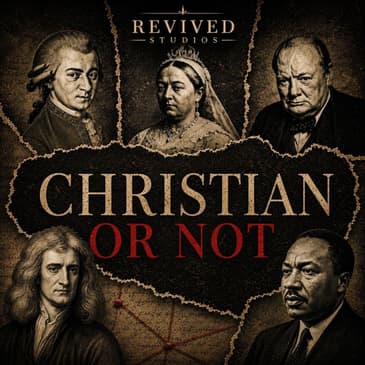
In the first episode of Christian or Not, we explore the faith of Isaac Newton. Was he truly a Christian? We examine what history and his own writings actually reveal about his beliefs in God, the Bible, and Jesus.
A thoughtful look at one of history’s greatest minds and the real story behind his faith.
Make sure to subscribe and for more from Revived Studios, check out Revivedthoughts.com
00:00 --> 00:03 [SPEAKER_01]: Christian or not is a production of Revive Studios.
00:14 --> 00:30 [SPEAKER_00]: This being governs all things, not as the soul of the world, but as Lord overall, and on account of his dominion he wants to be called Lord God, or universal ruler, the supreme God is a being eternal, infinite, and absolutely perfect.
00:31 --> 00:33 [SPEAKER_00]: Was written, Isaac Newton.
00:34 --> 00:40 [SPEAKER_00]: In his age when he lived, it was the church, it was the state who said what you believed and what was true.
00:40 --> 00:49 [SPEAKER_00]: but men like Galileo, Copernicus, they became challenging this and they came up with what we now called a scientific method.
00:49 --> 00:54 [SPEAKER_00]: So no longer, what other people say, what the church says is the truth, but can I prove?
00:55 --> 00:57 [SPEAKER_00]: What can other people prove, what is, you know, repeatable.
00:58 --> 01:04 [SPEAKER_00]: And that is where Newton came in with his culmination of this intellectual groundswell.
01:06 --> 01:07 [SPEAKER_00]: his principia.
01:07 --> 01:08 [SPEAKER_00]: I don't understand it.
01:08 --> 01:09 [SPEAKER_00]: I'm going to be honest with you.
01:10 --> 01:19 [SPEAKER_00]: If you're watching his podcast and expecting big physics, thoughts from us not happening, but Newton, he formulated laws of motion, universal gravitation.
01:19 --> 01:22 [SPEAKER_00]: He challenged the way the natural world is understood forever.
01:23 --> 01:29 [SPEAKER_00]: And it also inadvertently made a rift in society that puts science at odds with religion.
01:30 --> 01:37 [SPEAKER_00]: atheism, deism first, and then atheism became more normal throughout the Enlightenment into modern history.
01:38 --> 01:44 [SPEAKER_00]: was this Isaac Newton's intention, but would he think about the way some of his work is now used and interpreted?
01:44 --> 01:48 [SPEAKER_00]: Because for him, like I just quoted, it was absolutely clear.
01:48 --> 01:56 [SPEAKER_00]: His work of making sense of this world, in the fields of mathematics, physics, astronomy, and yes, also theology, only had one purpose.
01:57 --> 02:01 [SPEAKER_00]: To point at a wonderful creator, the Almighty God behind his all.
02:02 --> 02:17 [SPEAKER_00]: Yes, Isaac Newton considered himself a Christian and next to rocking the scientific scene with his books on motion, on light, on gravity, he also did extensive research into the Bible, for example, and time prophecies by Daniel and those in revelations.
02:18 --> 02:23 [SPEAKER_00]: So what did his fate mean to him and how did it impact his life and maybe that of those around him?
02:24 --> 02:29 [SPEAKER_00]: What did Isaac Newton, one of the greatest minds, not just of his time, but of all times
02:30 --> 02:34 [SPEAKER_00]: Let's go and find out if Sir Isaac Newton was Christian or not.
02:42 --> 02:44 [SPEAKER_00]: So, my name is Mark, this is Troy.
02:45 --> 02:47 [SPEAKER_00]: And this is Christian or not.
02:47 --> 02:48 [SPEAKER_01]: Christian or not.
02:48 --> 02:57 [SPEAKER_01]: So the goal of this show is to go through history and ask the very basic question, is this person a Christian or not?
02:57 --> 03:01 [SPEAKER_01]: I have been running church history podcast for a long time.
03:01 --> 03:03 [SPEAKER_01]: We've run the show, Revive Thoughts.
03:03 --> 03:08 [SPEAKER_01]: We've run through our studio with my wife, martyrs and missionaries and other podcasts as well.
03:08 --> 03:12 [SPEAKER_01]: But in all of these shows that we've been doing for a very long time, we've always been looking at
03:13 --> 03:15 [SPEAKER_01]: different people from church history.
03:15 --> 03:31 [SPEAKER_01]: These amazing people like Charles Birch and or Jonathan Edwards, St. Augustine, or some amazing missionaries like John G. Payton, Hudson Taylor, and those are all wonderful, fantastic people, but we know that their Christians, right, they went through the live serving and dedicating themselves to Christ.
03:32 --> 03:40 [SPEAKER_01]: And it was my wife who at one time made the kind of comment question, what about all the people that were not really sure what is their faith and what is it they believe in?
03:40 --> 03:41 [SPEAKER_01]: From that idea,
03:42 --> 03:45 [SPEAKER_01]: Can this show here that we're bringing to you right now, Christian or not?
03:46 --> 03:48 [SPEAKER_00]: Yeah, so, and I might be a new face.
03:48 --> 03:53 [SPEAKER_00]: I'm not Joel that you might know from Revive Thoughts, different voice, different face.
03:54 --> 03:56 [SPEAKER_00]: But my name is Mark, and I live in Indonesia.
03:56 --> 04:00 [SPEAKER_00]: So that's why we get to do this face-to-face in the same studio.
04:00 --> 04:01 [SPEAKER_00]: So that's a lot of fun.
04:01 --> 04:06 [SPEAKER_01]: Yeah, this is my first time being in a studio with someone else's Joel and I had a part ways.
04:06 --> 04:11 [SPEAKER_01]: We still run this show together, but we haven't been able to do that together a long time.
04:11 --> 04:13 [SPEAKER_01]: We both live in Indonesia together.
04:13 --> 04:19 [SPEAKER_01]: And currently, you know, it is a rainy as a rainy season's kicking off here in Indonesia.
04:19 --> 04:25 [SPEAKER_01]: We have all the kind of sounds we tried to add a little bit of that flare into the studio in a way that wouldn't be distracting.
04:25 --> 04:28 [SPEAKER_01]: I think it really only came through in the sound board behind us, but hey,
04:29 --> 04:35 [SPEAKER_01]: The reason for the show though, and I think the reason why I think the show will really resonate and in Mark, he's great, he's done the research.
04:35 --> 04:39 [SPEAKER_01]: He's got a passion for history that I'm excited to podcast with you on this.
04:39 --> 04:47 [SPEAKER_01]: I think that there, but it's just, we'll to ask the question, like there are so many different people from great generals and great kings.
04:48 --> 05:02 [SPEAKER_01]: to inventors, to explorers, to businessmen, or there's just politicians so many different people you can look out through history that you may have heard of and even learned about, but were they actually Christian?
05:03 --> 05:05 [SPEAKER_01]: And I really want to say at the beginning as we start off this show,
05:07 --> 05:08 [SPEAKER_01]: We're not God.
05:09 --> 05:14 [SPEAKER_01]: Like we are not able to see into their hearts to know whether or not they're faith in Jesus as real.
05:14 --> 05:17 [SPEAKER_01]: Jesus is clearing scripture that only God can judge the hearts.
05:18 --> 05:21 [SPEAKER_01]: But it is also clear that we can judge the fruits and we can look at their life.
05:21 --> 05:24 [SPEAKER_01]: We can look at what they say and we can see.
05:24 --> 05:27 [SPEAKER_01]: Does that match up with what the Bible says?
05:27 --> 05:31 [SPEAKER_01]: Does that match up with what I would expect the life of a Christian to look like?
05:32 --> 05:35 [SPEAKER_01]: We'll try to show grace, especially as we look at the certain cultures.
05:35 --> 05:45 [SPEAKER_01]: in places that some of these people are, I'm not expecting them to be perfect, but I absolutely think we can look back at history and at least do some guessing and discussion.
05:45 --> 05:47 [SPEAKER_01]: And so that's what we're going to try to do with this show.
05:48 --> 05:49 [SPEAKER_01]: We're going to start by giving you a rundown.
05:49 --> 05:53 [SPEAKER_01]: Maybe you're not a swimmer, you're with them, or maybe you haven't heard about them since history class.
05:53 --> 05:54 [SPEAKER_01]: It might have been a while.
05:54 --> 05:55 [SPEAKER_01]: So we'll give you kind of the walkthrough.
05:55 --> 05:56 [SPEAKER_01]: Who are they?
05:56 --> 05:57 [SPEAKER_01]: Why are they important?
05:57 --> 05:58 [SPEAKER_01]: And what are they famous for?
05:59 --> 06:02 [SPEAKER_01]: And then from that point on, we're going to kind of give you their theology.
06:02 --> 06:02 [SPEAKER_01]: We
06:02 --> 06:03 [SPEAKER_01]: what did they say?
06:03 --> 06:05 [SPEAKER_01]: They believed, how does that match?
06:05 --> 06:06 [SPEAKER_01]: Do we see their actions?
06:06 --> 06:09 [SPEAKER_01]: Is there something glaring that's telling us there's a problem or not?
06:10 --> 06:15 [SPEAKER_01]: And at the end, Mark and I will just both give our opinions and that they might agree, they might not agree.
06:16 --> 06:20 [SPEAKER_01]: And after that, we will, at will in the show asking you, did we get it right?
06:20 --> 06:23 [SPEAKER_01]: And at the end of each episode, we will have a kind of a recap.
06:23 --> 06:46 [SPEAKER_01]: a little bit of a chance for you to, well, we'll take the opinions of other people and because we want to be humble about this, if we're getting it wrong, if we really were off base and miss something, we want to hear from you and not because, again, this is not the judge's and heaven, but just so that we can give everyone a chance to kind of share like, hey, you guys did a good job, maybe, but you've so missed this other thing that makes it very obvious.
06:46 --> 06:50 [SPEAKER_01]: He loved Jesus or it makes it very obvious, actually he didn't, and it was all a shame.
06:50 --> 06:52 [SPEAKER_01]: And so that's what we're hoping to do with this show.
06:52 --> 06:54 [SPEAKER_01]: We're really excited to see where it goes.
06:54 --> 07:00 [SPEAKER_01]: And I'm really excited to learn more about Isaac Newton here because Mark, I got to be honest with you.
07:00 --> 07:05 [SPEAKER_01]: My only experience really with Isaac Newton is and teaching jobs, especially when I was a science teacher.
07:06 --> 07:31 [SPEAKER_01]: He would kind of get quoted as like a defender of the faith, like a he's a guy who believed in God and that quote you read at the very top from his sounds so very strong, but I know that as we looked at the script and as we did the research, I was surprised and maybe disappointed in the direction not the spoil it for anybody, but it you might be a little bit concerned by the end of this episode for us.
07:31 --> 07:54 [SPEAKER_00]: I mean, if you're a big, you know, like you just said, if you've been using your Isaac Newton quotes in your Christian school or in your science classes, even to watch your friends that may be, we're not levers, this by PD episode for you to watch and maybe listen to what we're saying about it and form your own opinions, but I think it's gonna be very interesting.
07:55 --> 07:59 [SPEAKER_00]: And I think we're also gonna fumble all the science, at least I am, like I am,
08:00 --> 08:01 [SPEAKER_00]: I'm not good at these things.
08:01 --> 08:03 [SPEAKER_00]: Like I was plugging in stuff for an employee.
08:03 --> 08:06 [SPEAKER_00]: So like, oh, it's like, you know, your magician, just making your work.
08:06 --> 08:07 [SPEAKER_00]: I plug in stuff in.
08:07 --> 08:14 [SPEAKER_00]: It's just like basic, like you remember as a kid, you had those toys where you had like square ghosts into the square circle goes into the circle.
08:15 --> 08:19 [SPEAKER_00]: That's basically what like sound and video tech is.
08:19 --> 08:20 [SPEAKER_00]: I'm probably offending some people now.
08:21 --> 08:28 [SPEAKER_00]: But like the stuff that's in his in his books, I mean, first of all, it's in Latin, I Latin, not great.
08:29 --> 08:34 [SPEAKER_00]: But even if they translated to English or Dutch, my own language, I'm like, I'm out.
08:34 --> 08:41 [SPEAKER_00]: Don't come in, I just know God made it all and you did it wonderfully and that's where my science sort of stops.
08:41 --> 08:43 [SPEAKER_01]: My science is probably even further behind you.
08:43 --> 08:45 [SPEAKER_01]: So that's about as much science as we have.
08:46 --> 08:48 [SPEAKER_01]: And as we cover these guys, look, we're not, you're not explorers.
08:48 --> 08:53 [SPEAKER_01]: So I can't comment on how well they explored or I'm not a great business tycoon.
08:53 --> 08:55 [SPEAKER_01]: So I can't explain how well they did that or a general.
08:55 --> 08:59 [SPEAKER_01]: our goal will be to look more at the person as a person and I am a person.
08:59 --> 09:01 [SPEAKER_01]: So that's where my qualifier for that will be.
09:01 --> 09:04 [SPEAKER_00]: Yeah, we're qualified as being a live.
09:04 --> 09:05 [SPEAKER_00]: Yeah, that's good.
09:05 --> 09:05 [SPEAKER_00]: Okay.
09:05 --> 09:07 [SPEAKER_00]: Well, let's dive in here.
09:07 --> 09:09 [SPEAKER_00]: So Isaac Newton, born on Christmas Day.
09:12 --> 09:16 [SPEAKER_00]: So 1642, actually some people are right away are going to be known with January 4th.
09:16 --> 09:18 [SPEAKER_00]: Yeah, they changed calendars.
09:18 --> 09:18 [SPEAKER_00]: You know, a whole
09:20 --> 09:24 [SPEAKER_00]: I like it Christmas day, like I'm a Christmas person, my wife is a big Christmas person.
09:24 --> 09:26 [SPEAKER_00]: So we're gonna stick with Isaac Newton.
09:26 --> 09:35 [SPEAKER_01]: Boy, I want to answer your life, but if I recall, she very recently in October has already started some hallmark film watching, so she, oh yeah, it's already ready for Christmas.
09:35 --> 09:36 [SPEAKER_01]: Hey, for Christmas.
09:36 --> 09:38 [SPEAKER_01]: And so you don't have Thanksgiving in the Netherlands.
09:38 --> 09:47 [SPEAKER_01]: So you wouldn't know that in America, I think it should be illegal to watch a Christmas movie, or do anything Christmas-related before Thanksgiving.
09:47 --> 09:50 [SPEAKER_00]: That's people will know there is actually like you have Thanksgiving, which is end of November.
09:50 --> 09:55 [SPEAKER_00]: We have Santa Claus, like our version of Santa Claus, or the original version of Santa Claus, if you will.
09:57 --> 10:01 [SPEAKER_00]: And now just just look it up, look it up, the numbers add up there.
10:01 --> 10:04 [SPEAKER_00]: We were drifting so far here, but it's okay.
10:04 --> 10:07 [SPEAKER_00]: So December 5th, that's when we're actually allowed to put up the Christmas tree.
10:08 --> 10:09 [SPEAKER_00]: We've, we've.
10:09 --> 10:12 [SPEAKER_00]: You know, we've smuggled a little bit with the day.
10:12 --> 10:19 [SPEAKER_00]: So anyway, Isaac Newton, born on Christmas day, it was allowed, no one was like, you know, it's not Thanksgiving yet, you can't be born.
10:19 --> 10:20 [SPEAKER_00]: He was born on Christmas day.
10:22 --> 10:30 [SPEAKER_00]: And it says, like, we pulled from all kinds of different biographies, he was born tiny and frail in a little village cold.
10:31 --> 10:35 [SPEAKER_00]: And now we know we're in England, wools thorp by cold syrup worth.
10:36 --> 10:48 [SPEAKER_00]: So, he was a small baby and they didn't think he was going to make it let alone live 84 years old and completely change the world and science and basically how we understand the universe.
10:49 --> 10:52 [SPEAKER_00]: His father also named Isaac Newton had died three months before he was born.
10:53 --> 11:00 [SPEAKER_00]: So right from the beginning Newton was fatherless and when you was three years old this actually kind of said, his mom remarried.
11:01 --> 11:03 [SPEAKER_00]: and it meant he had to live with his grandmother.
11:03 --> 11:12 [SPEAKER_00]: I don't know how you know British society function back then, but apparently she just sort of started a new family and he got to live with grandma.
11:12 --> 11:16 [SPEAKER_01]: I do know that there's like there are a lot of stories like that through history.
11:16 --> 11:19 [SPEAKER_01]: And there is also just like, if an image in British because
11:20 --> 11:39 [SPEAKER_01]: I know that at the time it was very common for like wealthier or more aristocratic families to kind of pass the baby off to be raised a lot of times by like a wet nurse or something like that because I remember I think it was Winston Churchill who basically had more fondness like looked at the that woman as his mother more than like his actual mother later on in life so there is definitely
11:40 --> 11:45 [SPEAKER_01]: It's nice to be alive now when like we actually didn't get to know our parents for the Irish part most of the time.
11:45 --> 11:46 [SPEAKER_00]: Yeah, no, okay.
11:46 --> 11:50 [SPEAKER_00]: Yeah, so not new to the, um, but yeah.
11:50 --> 11:55 [SPEAKER_00]: So kind of a rough start there, uh, but it didn't stop him at least not intellectually.
11:56 --> 12:01 [SPEAKER_00]: So he went to school and, uh, this is like a quote from one of the biographies.
12:01 --> 12:03 [SPEAKER_00]: His mind was unstoppable.
12:03 --> 12:07 [SPEAKER_00]: Around H12, he was sent to the King School in Grantham.
12:07 --> 12:09 [SPEAKER_00]: He lived with a local apothecary.
12:09 --> 12:19 [SPEAKER_00]: So again, H12 already added a house, you know, already living in his like student dorm probably not, but already gone from his grandma as well.
12:21 --> 12:22 [SPEAKER_00]: And he was in school.
12:23 --> 12:24 [SPEAKER_00]: And then mom got involved again.
12:24 --> 12:27 [SPEAKER_00]: This is, I like this, this part this story.
12:28 --> 12:32 [SPEAKER_00]: And pull them out of school and said, Isaac Newton, you're going to be a farmer.
12:32 --> 12:38 [SPEAKER_01]: which is absolutely crazy because like where she been his whole life is doing so great in school.
12:38 --> 12:41 [SPEAKER_01]: And she says, no, no, no, I'm not raise than one of those learning people.
12:41 --> 12:45 [SPEAKER_01]: Okay, let's get you where you belong on of on a farm.
12:45 --> 12:47 [SPEAKER_00]: Yeah, well, the good news is it didn't stick.
12:48 --> 12:50 [SPEAKER_00]: He, he wasn't a great farmer by all the counts.
12:51 --> 12:58 [SPEAKER_00]: And the school master actually came to his mom and said, like, please let me have him back, send him back to school.
12:58 --> 12:59 [SPEAKER_00]: Like, he's, he's a great student.
12:59 --> 13:00 [SPEAKER_00]: We need him.
13:00 --> 13:01 [SPEAKER_00]: Yeah, that's clearly.
13:01 --> 13:02 [SPEAKER_01]: That's a good teacher.
13:02 --> 13:03 [SPEAKER_01]: Like, when you're like, hey, bring my kid back.
13:03 --> 13:04 [SPEAKER_01]: Like, this guy was smart.
13:04 --> 13:05 [SPEAKER_01]: What are you, what are you doing?
13:05 --> 13:07 [SPEAKER_01]: Put him out there playing, turn up, or something.
13:07 --> 13:12 [SPEAKER_00]: Well, I mean, especially in this day and age, because there was no laws telling them to put kids in school at all.
13:12 --> 13:26 [SPEAKER_00]: I can only imagine like we have now, you're like, at least in the Netherlands, I know it's like mandatory until you're like 18 or until you graduate like if you graduate a little bit earlier than that, but you have to be in school like there's just laws saying you have to be.
13:26 --> 13:41 [SPEAKER_01]: I'm pretty sure in America you're not allowed to like take your kids education away and just make them a farmer without any education either I'm not sure about that 100% but pretty sure it's mostly from the world but 1600s I mean come on like bad things were so different back then
13:41 --> 13:57 [SPEAKER_00]: yeah it was a different time so um he went to school he then went on to study at Trinity College in Cambridge which will prove to be kind of an ironic name Trinity College but will uh not you know spoil or spill all the beans right now
13:59 --> 14:24 [SPEAKER_00]: He wasn't wealthy, he started off as something called a sub-sizar or subsizer, so Caesar, I don't know, how you pronounce that, which basically meant he had to work his way through college, so he was actually doing chores for the other students while also attending classes, which sounds rough, but then again, it came off in the text that are as a pretty common thing, and it actually gave me a chance to go to college.
14:25 --> 14:42 [SPEAKER_01]: Yeah, if I recall correctly, I think George Whitfield is a famous preacher from the 7000 also kind of got his way through eight Oxford or something like that in a similar way and to be honest, like, is someone that told me and college like, hey, you can do all these chores and we'll make college cheaper for you.
14:42 --> 14:44 [SPEAKER_01]: I think there's a lot of people who would still jump that that idea.
14:45 --> 14:45 [SPEAKER_00]: Yeah, that makes sense.
14:46 --> 14:53 [SPEAKER_00]: Yeah, so he's in college and while doing chores, he also learns a lot of stuff, but he has to go through like the regular curriculum.
14:54 --> 15:01 [SPEAKER_00]: Aristotle was a big thing back then still, and had to learn his languages like Latin, Greek, all those things.
15:02 --> 15:10 [SPEAKER_00]: But what he was interested about, and I already mentioned it in the intro, was like the new stuff, like the hip and happening stuff.
15:11 --> 15:15 [SPEAKER_00]: The Scott Galileo saying, you know, maybe we're not the center of the universe.
15:15 --> 15:21 [SPEAKER_00]: And some other smart people that I'm not even going to name because then I have to pretend that I know what kind of smart thing they did.
15:21 --> 15:27 [SPEAKER_00]: I know, I know Kepler, I think there's telescopes named after me, so they're like Kepler telescope, maybe somewhere in Europe.
15:27 --> 15:27 [SPEAKER_00]: I don't know.
15:28 --> 15:30 [SPEAKER_01]: capital or kelp is in the ocean.
15:30 --> 15:31 [SPEAKER_01]: I don't think it's related.
15:31 --> 15:32 [SPEAKER_01]: Our Friday, Iway.
15:32 --> 15:33 [SPEAKER_01]: But it's similar name.
15:34 --> 15:36 [SPEAKER_00]: Yeah, I don't think that's what we're talking about here.
15:36 --> 15:42 [SPEAKER_00]: Anyway, in his own time, he actually, he would be reading like basically the whole library there.
15:42 --> 15:50 [SPEAKER_00]: He would be reading all the books, and he would even be working on stuff concepts that his professors didn't even understand really.
15:50 --> 15:53 [SPEAKER_00]: So he was having a good time in college.
15:54 --> 16:01 [SPEAKER_00]: And then while he was having a good time, a not so great time came with something called the Great Plague, which I still think,
16:02 --> 16:17 [SPEAKER_00]: I don't think it should be called great, but the great play came, London shuts down, Cambridge shuts down, and Newton has to go back to wool store by, I forgot what the name was, something something worth, and he is there.
16:17 --> 16:27 [SPEAKER_01]: I'm going to interrupt you, I'm going to interrupt you, because that great play in London happened near 1665, and the Revive Studios Revive Thoughts has a deep dive, two and a half hour long podcast.
16:27 --> 16:31 [SPEAKER_01]: on the year 1666 in London about a fire that happened the year afterwards.
16:32 --> 16:46 [SPEAKER_01]: The fire killed a lot less people than that play itself did, which killed a ton of people, but it is a, I know there's nothing new that I didn't need, but I would just say, it's a wild ride that if you've never, the entire world was changed by this fire and almost no one has ever heard of it.
16:46 --> 16:55 [SPEAKER_01]: So I'm just saying, that plague that affected Isaac Newton that would go on that season of London would go on to reshape the entire world
16:57 --> 16:59 [SPEAKER_00]: That's, yeah, I actually didn't put those two together.
16:59 --> 17:01 [SPEAKER_00]: I listened to that deep dive and I loved it.
17:01 --> 17:04 [SPEAKER_00]: It's like, you know, there's Catholic conspiracies everywhere.
17:04 --> 17:07 [SPEAKER_00]: And you know, where at the same time, it's amazing.
17:07 --> 17:07 [SPEAKER_00]: Great story.
17:07 --> 17:15 [SPEAKER_00]: If you have time, look for it, revive thoughts, a deep dive on the lawn fire, shameless plugger, but I wasn't part of it, so I can plug it all I want.
17:16 --> 17:20 [SPEAKER_00]: And anyway, the great play comes, you tend to have to go back and he,
17:21 --> 17:25 [SPEAKER_00]: actually keeps working on stuff and they even coal like these two years that he's back home in his hometown.
17:26 --> 17:28 [SPEAKER_00]: They coal them his miraculous years.
17:29 --> 17:38 [SPEAKER_00]: And this is when he started working on his calculus, he started working on like the basis of the gravitational universe, universal gravitation.
17:39 --> 17:41 [SPEAKER_00]: Man, this is a hard episode.
17:41 --> 17:42 [SPEAKER_00]: We're starting out with a
17:42 --> 17:48 [SPEAKER_00]: the way the good one here, a theory of prisms, like splitting up the light, all those things.
17:48 --> 17:52 [SPEAKER_00]: He all did that when he wasn't actually in Cambridge.
17:52 --> 17:54 [SPEAKER_01]: So this was when the Apple fell on his head.
17:54 --> 17:56 [SPEAKER_00]: This is not when the Apple fell on his head later.
17:58 --> 18:03 [SPEAKER_00]: There was very little Apple falling in all of the official biographies.
18:03 --> 18:08 [SPEAKER_00]: They even went out of the way to mention no apples were falling on Newton's head.
18:08 --> 18:15 [SPEAKER_00]: However, it is true that he saw an apple fall and he was fascinated by the fact that it felt like straight down.
18:16 --> 18:17 [SPEAKER_00]: So he was like, how does it work?
18:17 --> 18:22 [SPEAKER_00]: And then somehow from that thought, he's like, and does that gravity affect the moon?
18:22 --> 18:28 [SPEAKER_00]: I'm like, my mind doesn't work the way, but that's how he works, and that's how he came up with like universal gravitation.
18:28 --> 18:41 [SPEAKER_01]: So the thing I've always wanted, because it is this groundbreaking idea that when things fall, they go straight down, which of course, everyone knew that, though, like nobody was knocking plates out their table and going, yeah, I can't believe it hits the floor every time.
18:41 --> 18:46 [SPEAKER_01]: So it's the way that he was able to word it and add it to science that,
18:46 --> 18:47 [SPEAKER_01]: change everything about it.
18:48 --> 19:07 [SPEAKER_01]: And I've always just wondered, is there some other really obvious thing that if we could just like, like a gravity level obvious simple thing out there that if somebody just could figure out a word in the right way, you could be like, and that's when, you know, whatever the other thing is, we become famous for not an our version of an apple falling or hilarious.
19:07 --> 19:11 [SPEAKER_01]: There's something else just that blatantly obvious that I could add to history them.
19:11 --> 19:12 [SPEAKER_00]: Yeah, I don't know.
19:12 --> 19:16 [SPEAKER_00]: I feel like I feel like most stuff by now has been invented.
19:16 --> 19:26 [SPEAKER_00]: Like, if you look to like the sci-fi stuff, maybe if you haven't had the warp drive or something, like, yeah, you know, the faster than light speeds and the, you're called, like, the,
19:27 --> 19:29 [SPEAKER_00]: Hypergems from Star Wars like if you can figure that one out.
19:30 --> 19:37 [SPEAKER_00]: I think I think you're going to be named in a street people are going to podcast about your story Or probably at the level now where the easy stuff like gravity.
19:37 --> 19:38 [SPEAKER_01]: Okay, it's not easy again.
19:38 --> 19:39 [SPEAKER_01]: What new did was great.
19:39 --> 19:40 [SPEAKER_01]: I'm not letting them.
19:40 --> 19:41 [SPEAKER_01]: I'm just saying like it.
19:41 --> 19:45 [SPEAKER_01]: It's it sounds easy when you don't know any actual science standard.
19:45 --> 19:53 [SPEAKER_00]: So what you're saying is that this apple falling was just low hanging fruit That was really good
19:54 --> 20:15 [SPEAKER_00]: Okay, anyway, uh, also just really coming back to the gravity thing like like people knew there was gravity like they knew that they stuck to the floor in a natural way and if they jumped they would come back down, but what he said was actually like okay, but the earth has gravity, but the moon has gravity and the sun has gravity and everything is affecting
20:16 --> 20:17 [SPEAKER_00]: everything basically.
20:17 --> 20:24 [SPEAKER_00]: So that's, that's, and there's going to be scientists, actual scientists in our comments explaining this to us, and it's going to be great.
20:24 --> 20:27 [SPEAKER_00]: But this is how we understand it, and this is how it's going to be on the record today.
20:29 --> 20:38 [SPEAKER_00]: He was able to return to Cambridge, the plague went away again, and this is when, after discovering his stuff, he started sharing his stuff.
20:38 --> 20:44 [SPEAKER_00]: And this is when Newton found out that knowing something, writing about it, you know, in your own personal time.
20:45 --> 20:47 [SPEAKER_00]: And then sharing about it is a different thing.
20:47 --> 20:58 [SPEAKER_00]: So he got some heat from some people, especially one guy called Robert Hook, a key figure at the Royal Society, which was like,
20:59 --> 21:13 [SPEAKER_00]: You know, we're a really judged your science, just like, and he said, oh, no, what drew you're doing right now, especially with prisons, like splitting up a light and saying, hey, look, white light, actually, is like all these different lights combined together.
21:13 --> 21:18 [SPEAKER_00]: And who said, no, I already knew this already did this.
21:18 --> 21:30 [SPEAKER_00]: He really was like, you're play driving me and what happened is, and I'm quoting here, Newton was unable rationally to confront criticism less than a year after submitting the paper.
21:30 --> 21:38 [SPEAKER_00]: He was so unsettled by the give and take of honest discussion that he began to cut his ties and he withdrew into virtual isolation.
21:38 --> 21:38 [SPEAKER_00]: So,
21:40 --> 21:44 [SPEAKER_00]: he wasn't having the best of times sharing his groundbreaking theories.
21:46 --> 21:52 [SPEAKER_00]: Of course, a lot of people were excited, but also got a little push back here and so.
21:52 --> 21:55 [SPEAKER_00]: Yeah, so I don't know how that affected him.
21:55 --> 22:05 [SPEAKER_00]: It doesn't really say, but it does say, at times he would have like nervous breakdowns or just really withdraw from even from science and just put it away for a little bit.
22:07 --> 22:12 [SPEAKER_00]: 1687, he published the, and I'm going to formal this one as well.
22:12 --> 22:18 [SPEAKER_00]: Philosophia, Natura Alice, Prinsipia, Mathematica, or in Robert English, the Prinsipia.
22:19 --> 22:24 [SPEAKER_00]: And this is where he outlines three laws of motion, law of universal gravitation.
22:24 --> 22:29 [SPEAKER_00]: and it's been described as a mathematical framework for understanding how the universe works.
22:30 --> 22:37 [SPEAKER_00]: So, and this is like his peak science, like he's the guy at this time for science.
22:38 --> 22:40 [SPEAKER_00]: And yeah, you know, he's doing great.
22:41 --> 22:47 [SPEAKER_00]: 60, 90s, his reputation, sky high, he's basically a celebrity of his time.
22:48 --> 23:14 [SPEAKER_00]: And then in 1996, he pretty much stopped, so what happened was there were Catholics, again, like listen to the London fire, there was Catholics around every corner trying to take your country in those days in England and they were trying to get into Cambridge as well but Newton sort of kept them out and because of it, he was given a political position and in his
23:14 --> 23:22 [SPEAKER_00]: case that meant becoming the warden of the royal mint, which isn't, you know, mint's peppermint, but it has to do with coins.
23:22 --> 23:23 [SPEAKER_00]: I know.
23:23 --> 23:27 [SPEAKER_01]: It made me think of peppermints, but I'm sure that the other one is more important and better.
23:27 --> 23:29 [SPEAKER_00]: No, it's about had to do with the money.
23:30 --> 23:37 [SPEAKER_00]: And in 1699, even three years later, he became the master of the mint.
23:37 --> 23:55 [SPEAKER_00]: So you start out as a patawan of the mint and you become devoured enough to mint and then afterwards you become the master of the mint and I love this part Like this is just just so great when you think of Sir Isaac Newton create mind and he becomes the master of the mint He's busy with counterfitting.
23:55 --> 23:56 [SPEAKER_00]: He's not doing it.
23:56 --> 24:02 [SPEAKER_00]: He's preventing it acting on it and what he would actually do he will and this is like
24:04 --> 24:08 [SPEAKER_00]: not in every biography, but I find there's enough story on it to make it credible.
24:08 --> 24:14 [SPEAKER_00]: He would actually, you know, disguise himself because he is super famous Isaac Newton.
24:14 --> 24:18 [SPEAKER_00]: Go to the bars, look for the fake coins, and just find the counterfeit of himself.
24:19 --> 24:43 [SPEAKER_01]: That's which is I mean like trying to picture that like the Sherlock Holmes almost style of Isaac and is so random to think of like because I In my head he's like an Albert Einstein he kind of guy like this old genius with chalkboard or something like that and so then trying to picture him like Basically being a detective basically being like a long man brought a drug That bill you've got there.
24:43 --> 24:47 [SPEAKER_01]: I said I've got him now like you know like that's just such a wild aspect and also like
24:48 --> 24:49 [SPEAKER_01]: It's super cool.
24:49 --> 24:53 [SPEAKER_01]: It seems like a fun hobby, but it seems almost like a waste of his talent.
24:53 --> 24:54 [SPEAKER_01]: Yeah.
24:54 --> 25:04 [SPEAKER_00]: Then again, like, if you really want to get something done, wouldn't you want one of the smartest people in like the known world at that time to be on the guy?
25:04 --> 25:14 [SPEAKER_01]: If our TV show is on crime of taught us anything, you need one really smart guy with special gifts who leads the confused policemen into every kind of detective scene, right?
25:14 --> 25:19 [SPEAKER_01]: And that's I guess this is where we got it from Isaac Newton was the original like genius detective guy.
25:19 --> 25:38 [SPEAKER_00]: I got to say this is this is an amazing TV series concept like just with the real Isaac Newton everybody's like oh we're going to learn about science and it's just him being embarrassed disguised You know finding counterfeiters actually Oh, biography on Isaac Newton the series and it has nothing to do with this science.
25:38 --> 25:40 [SPEAKER_01]: It's purely Isaac Newton the detective
25:40 --> 25:56 [SPEAKER_00]: would definitely take people by surprise I would watch it I would watch it I like it so anyway and in this time he also became more of like a public figure even more he did very little science anymore like he was just hanging out in society he'd be getting more
25:57 --> 26:19 [SPEAKER_00]: sociable what they became a respected figure where public facing and let's see in 1703 you became president of the Royal Society and in 1705 he was knighted by Queen and becoming sir Isaac Newton, which we probably should have been saying the whole time because there's probably some very dish people there I
26:20 --> 26:25 [SPEAKER_01]: to be able to access to any of our great British listeners for not using Sir enough in this episode.
26:26 --> 26:27 [SPEAKER_01]: But I don't see that changing.
26:28 --> 26:29 [SPEAKER_01]: Has we got to the rest of this part?
26:29 --> 26:32 [SPEAKER_01]: I don't think we'll still probably be calling him Isaac Newton.
26:33 --> 26:36 [SPEAKER_00]: At least we're saying Newton, we're not just saying like, you know, good old Isaac.
26:36 --> 26:40 [SPEAKER_01]: Yeah, it's, you know, because by the Isaac, I'm going to think of Isaac from the Bible anyway.
26:40 --> 26:41 [SPEAKER_01]: So I kind of need to put the Newton on there.
26:41 --> 26:43 [SPEAKER_01]: It's just to clarify my mind.
26:43 --> 26:45 [SPEAKER_00]: Yeah, you can mix those two up like that.
26:45 --> 26:48 [SPEAKER_00]: Like as far as I know, Isaac, it very little Isaac or the world's science.
26:48 --> 26:51 [SPEAKER_01]: He, he got, he laid down the altar to get killed.
26:51 --> 26:55 [SPEAKER_01]: And I don't think he even caught one counterfitter is as far as I know.
26:56 --> 26:59 [SPEAKER_00]: just talk it, I mean, we're really drifting very far.
27:00 --> 27:07 [SPEAKER_00]: Isn't it kind of ironic then that he was actually fooled by his own son, Jacob, raring at this guy's like, Oh, wow.
27:08 --> 27:11 [SPEAKER_01]: There's no real connection there, but it felt deep there, you man.
27:11 --> 27:12 [SPEAKER_01]: I would what a thought.
27:13 --> 27:13 [SPEAKER_01]: Yeah, okay.
27:14 --> 27:17 [SPEAKER_01]: Isaac Newton would have seen right through Isaac's problem.
27:18 --> 27:20 [SPEAKER_00]: Yep, yeah, he wouldn't be fool.
27:20 --> 27:25 [SPEAKER_00]: He yeah, he would probably call it with way more better schemes to get that blessing.
27:25 --> 27:27 [SPEAKER_01]: He would have been in disguise for stars.
27:27 --> 27:28 [SPEAKER_00]: That's true.
27:28 --> 27:33 [SPEAKER_00]: Yeah, he would be the one disguise that it'd be like, ah, you thought I was your, no, I don't know.
27:33 --> 27:37 [SPEAKER_01]: I don't know where we're going to be there, but this might be the first time in like any history.
27:37 --> 27:40 [SPEAKER_01]: of any show or anything where those two parallels have been made.
27:41 --> 27:43 [SPEAKER_01]: And that's just the kind of quality entertainment we expect.
27:43 --> 27:44 [SPEAKER_01]: Absolutely.
27:44 --> 27:45 [SPEAKER_01]: Christian or not?
27:45 --> 27:48 [SPEAKER_01]: Like we're going to make deep connections that I've never been made for the app before.
27:48 --> 27:52 [SPEAKER_00]: And now watch us bring it all together by just continuing with the script.
27:53 --> 27:54 [SPEAKER_00]: Because now we get it's kind of funny.
27:54 --> 27:56 [SPEAKER_00]: I think like, okay.
27:57 --> 28:07 [SPEAKER_00]: And this is not just like a new phase in this life, like so we pretty much done his biography by now, but there was one thing which I didn't know and I did not expect at all.
28:08 --> 28:15 [SPEAKER_00]: Like I'm thinking Isaac Newton and Lightenman, like, you know, people are really thinking in ways that we are thinking.
28:15 --> 28:22 [SPEAKER_00]: But then I found out that he had the most extensive library of that time on Alchemy.
28:23 --> 28:25 [SPEAKER_00]: Which was, no, kind of surprised to me.
28:25 --> 28:27 [SPEAKER_01]: I think it's pretty cool on some level.
28:27 --> 28:32 [SPEAKER_01]: I mean, Alchemy didn't work out because we can't just take random metals and turn them into gold.
28:33 --> 28:52 [SPEAKER_01]: But I got to give the people in the 1600s credit for trying, you know, and as much as chemistry tries to pretend like they've gotten so much better, like chemistry itself is not Alchemy, but if you don't know how chemistry works, it kind of looks like magical things changing without explanation.
28:53 --> 28:53 [SPEAKER_00]: Yeah, okay.
28:54 --> 29:21 [SPEAKER_01]: I'm this this is Troy's opinion on Alka on Alka and chemistry if there's angry chemistry teachers in the comments just take it up a tour I'm just saying that just like astronomy owes it's like origins to the people reading the stars and me like yeah the gods are blessing your crops tonight chemistry kind of owes itself to these people who accidentally poison themselves trying to turn random metals in the gold and they might not be comfortable with that but that's you know way back in their history that's that's where it started.
29:22 --> 29:31 [SPEAKER_00]: That's a fair point, and that's actually why it's so interesting to see that someone has smart and newton coming up with all these new ideas is also really interesting.
29:31 --> 29:33 [SPEAKER_00]: And Alkami, like, yeah, happy.
29:34 --> 29:35 [SPEAKER_00]: so many books in it.
29:35 --> 29:37 [SPEAKER_00]: And even, and this is, this is great.
29:37 --> 29:40 [SPEAKER_00]: Like he was also working on plague cures.
29:40 --> 29:43 [SPEAKER_00]: And I'm going to just read the full quote here.
29:43 --> 29:53 [SPEAKER_00]: The best is a toad suspended by the legs in a chimney for three days, which at last vomited up earth with various insects in it.
29:53 --> 29:55 [SPEAKER_00]: Onto a dish of yellow wax.
29:56 --> 29:59 [SPEAKER_00]: If you're taking notes, you know, make good notes, you know, you're really curious.
29:59 --> 29:59 [SPEAKER_00]: Yeah.
30:00 --> 30:02 [SPEAKER_01]: And that's what I've been doing wrong.
30:02 --> 30:04 [SPEAKER_01]: You know, I was at yellow enough.
30:04 --> 30:12 [SPEAKER_00]: I just got to get the yellow wax and then shortly after I'd like after the toe died and then combining powdered toe.
30:12 --> 30:20 [SPEAKER_00]: So you're getting no powder down with the excretions and Sarah made into Los Enges and warned about the
30:26 --> 30:27 [SPEAKER_01]: There you have it.
30:27 --> 30:30 [SPEAKER_01]: Is that, um, that's turned out to work.
30:30 --> 30:32 [SPEAKER_01]: I mean, is that what Dr. Sue today?
30:32 --> 30:33 [SPEAKER_01]: I don't think so.
30:33 --> 30:38 [SPEAKER_01]: I, I try to look for like extensive, you know, studies on test personally.
30:38 --> 30:43 [SPEAKER_01]: But I mean, we've done some, I'm sure some experiments that it just sold serum launches.
30:43 --> 30:50 [SPEAKER_01]: I mean, it's amazing, again, like he said, it's amazing to think of somebody who's, you know, like he understood gravity on a level, like,
30:51 --> 31:04 [SPEAKER_01]: none of us are going to he wrote so many mathematical maybe invented calculus another guy I think also things he invented calculus is you know, but I think ghosts didn't and yet he's he's I mean He made he's show up at one of his lectures.
31:04 --> 31:05 [SPEAKER_01]: He's teaching all this stuff.
31:05 --> 31:11 [SPEAKER_01]: He'd be taking notes like crazy And then he go home and you'd be smelling this dead toe and he's like, well, you know We're trying to word off the plague over there.
31:12 --> 31:13 [SPEAKER_01]: So I hung up the dead head
31:13 --> 31:36 [SPEAKER_00]: Yeah and and don't take don't take us wrong here like we're not trying to bash icing you to say all the code dummy actually was not actually not I think it just shows his like his the way his mind worked like he was trying to figure out everything and yet you know the medical field was a little less developed in his time so there was a little bit more toe and yellow wax around in medicine than there is now maybe
31:37 --> 31:57 [SPEAKER_00]: So it just shows like he was interested in everything and it also shows in his next point like he was also very interested in theology and it actually said in a couple of sources he wrote more on theology and alchemy those two combined than anything else he wrote on.
31:57 --> 31:59 [SPEAKER_00]: So there was actually one of the things that he was really
32:00 --> 32:00 [SPEAKER_00]: busy with.
32:00 --> 32:09 [SPEAKER_00]: He wrote like books on Daniel and Revelation on how to how those prophecies had worked out through history and what was still to come.
32:09 --> 32:16 [SPEAKER_00]: And so it's actually very interesting also to see that, yeah, you know, his mind went that way as well.
32:16 --> 32:19 [SPEAKER_01]: And then a revelation, of course, like, I mean, all of that stuff is interesting.
32:19 --> 32:22 [SPEAKER_01]: It's surprising that we don't have more people writing about that.
32:22 --> 32:39 [SPEAKER_01]: But even today, like, some of the great, like, thinkers of our time have, I've seen them on podcasts and doing interviews and they'll talk about their thoughts on, like, Daniel in Revelation, you're like, where you're talking about, like, it's just fascinating, interesting people are fascinated and interested in deeper subjects.
32:40 --> 32:43 [SPEAKER_01]: It's actually a question, I was not anywhere on the list or anything, but I was the same about as you were talking.
32:43 --> 32:51 [SPEAKER_01]: Do you think if Isaac Newton had never done gravity, had never done all those scientific things that he did?
32:51 --> 32:54 [SPEAKER_01]: Do you think he would be known as like a theologian?
32:54 --> 32:58 [SPEAKER_01]: Like would we know his name at all because of his theological writings?
32:58 --> 33:03 [SPEAKER_01]: Or would it just be just a random footnote in someone's bibliography?
33:03 --> 33:08 [SPEAKER_00]: Well, no, but not for the reasons that you think of maybe like it wasn't good theology or anything.
33:09 --> 33:20 [SPEAKER_00]: He actually didn't publish most of it because and now we're getting to where it gets interesting where we get you know to the sort of the main dish of this this podcast today.
33:21 --> 33:26 [SPEAKER_00]: It wasn't like very mainstream theology stuff that he was writing about.
33:26 --> 33:30 [SPEAKER_00]: So yeah, and we're going to get more into that now.
33:30 --> 33:37 [SPEAKER_00]: I'm just going to really quickly finish his biography here because he died 1727.
33:38 --> 33:40 [SPEAKER_00]: And then it was written on his grave.
33:40 --> 33:45 [SPEAKER_00]: And I want to read that because I think it really gives a good segue into the next part.
33:47 --> 34:12 [SPEAKER_00]: So on his gravestone it says, here is buried Isaac Newton night, who by a strength of mind almost divine and mathematical principles peculiarly his own explored the course and figures of the planets, the paths of comments, the tides of the sea, the disillularity, the disillularities in rays of light and what no other scholar has previously imagined the properties of the colors that's produced.
34:13 --> 34:35 [SPEAKER_00]: diligent, seditious, I don't know that word, sorry, and faithful in his expositions of nature, antiquity and holy scriptures, and here it comes, he vindicated by his philosophy, the majesty of God, mighty and good, and expressed the simplicity of the gospel in his manners, mortals rejoice that there has exist as such and so great an ornament of the human race.
34:37 --> 34:37 [SPEAKER_00]: So here again,
34:42 --> 34:56 [SPEAKER_00]: Through he vindicated by his philosophy, the majesty of God mighty and good like even on his grave So they're like like quoting this like hey this guy he was just under forefront of of proving who God was and
34:57 --> 35:12 [SPEAKER_01]: Um, like he's well, and I think if you've ever taken any kind of Christian history course or you've ever had to learn about it or teach it or anything in high school like whenever you get to that part in history, that's like here comes the enlightenment here comes the guys who start to tear down.
35:12 --> 35:17 [SPEAKER_01]: what we believe in and kind of write down the Christian societies that have been there.
35:18 --> 35:21 [SPEAKER_01]: And there's a lot more to it than that, but for simple history, that's kind of how it's taught.
35:22 --> 35:37 [SPEAKER_01]: Isaac Newton is kind of the guy, I feel like that a lot of quotes suddenly show up from saying, but look, some of these really great thinkers are here believing in God, defending God, and it's kind of like, okay, yeah, sure, we had these Enlightenment guys, but like, let's
35:37 --> 35:45 [SPEAKER_01]: not pretend that they were all atheist, or they wouldn't have been atheist at that time, but basically the anti-theist of their time.
35:46 --> 35:50 [SPEAKER_01]: And that's how he's been viewed to me up until we did the research for this episode.
35:51 --> 35:51 [SPEAKER_00]: Yeah, okay.
35:52 --> 35:57 [SPEAKER_00]: So I think if you're listening to this, looking and watching this video, you might now want to know, but we feel something coming.
35:57 --> 35:59 [SPEAKER_00]: What's what's coming, guys?
35:59 --> 36:01 [SPEAKER_00]: You know, tell me, tell me, well, we're going to tell you.
36:07 --> 36:17 [SPEAKER_00]: Okay, so Isaac Newton and his faith, like you just asked this question, trying it's a very interesting question, because if he wrote that much on theology, where is it?
36:17 --> 36:23 [SPEAKER_00]: Why don't we, you know, why isn't the up there in the lists of the books that we read about theology?
36:23 --> 36:32 [SPEAKER_00]: Well, histiology was not what we would call mainstream even for his time, even so much that what he believed was
36:34 --> 36:40 [SPEAKER_00]: the Anglican Church would have just thrown him out for it like he could not be public about his so what was so controversial.
36:41 --> 36:44 [SPEAKER_00]: He was an Aryan basically.
36:44 --> 36:46 [SPEAKER_00]: He said, only God is God.
36:46 --> 36:48 [SPEAKER_00]: Jesus, not God.
36:49 --> 36:51 [SPEAKER_01]: And that is your deal breaker.
36:51 --> 36:53 [SPEAKER_01]: I ain't for a Christian, right?
36:53 --> 36:59 [SPEAKER_01]: Like we've got to believe in Jesus Christ for followers of Christ and Jesus Christ is both God and man.
37:00 --> 37:03 [SPEAKER_01]: And when you put that in there, it was like, it's done.
37:03 --> 37:23 [SPEAKER_01]: There's, I don't want to say there's nothing more to say, because I do want to hear a little bit more about Isaac Newton's beliefs, but on a show like Christian or not, when we're asking the question of, was this person a Christian or not, if in their words they're saying, I deny that Jesus Christ is God, that that's it.
37:23 --> 37:26 [SPEAKER_01]: The show doesn't, this doesn't have to be much of a controversial episode in that way.
37:26 --> 37:27 [SPEAKER_01]: We've, we've nailed it.
37:28 --> 37:31 [SPEAKER_00]: I don't think so, but there is a lot more to say about this indeed.
37:32 --> 37:48 [SPEAKER_00]: So a lot of his stuff wasn't published, and he sent it to his friend John Locke, another philosopher of that day, and he actually published most of it later when Newton was already long gone, and even some of this stuff only came out in the 20th century.
37:48 --> 38:00 [SPEAKER_00]: So, it might explain how, for a longer time, he really was viewed as, like, hey, look at his great Christian guy in doing all this science with pointing to God.
38:01 --> 38:06 [SPEAKER_01]: I mean, looking at his gravestone, you would think, I mean, who wouldn't want that on their gravestone, you know?
38:06 --> 38:11 [SPEAKER_01]: I mean, even if you took off the science part, I'd be pretty happy if that last part was my gravestone.
38:11 --> 38:13 [SPEAKER_01]: Certainly no part of me got out of that.
38:13 --> 38:13 [SPEAKER_01]: This guy doesn't believe.
38:13 --> 38:27 [SPEAKER_00]: Yeah, you know, just to re-read the quote mortals rejoice that there has existed such and so a great an ornament of the human race, like, yeah, that that would look good on anyone's rafestone.
38:27 --> 38:31 [SPEAKER_01]: Actually, in just, there's such an aside, I apologize, but that's what great craves.
38:31 --> 38:36 [SPEAKER_01]: So like what nowadays, rest in peace, father of three, like this is so much better.
38:36 --> 38:37 [SPEAKER_01]: Yeah.
38:37 --> 38:39 [SPEAKER_01]: We really need to up our gravestone games, guys.
38:39 --> 38:40 [SPEAKER_00]: Yep.
38:40 --> 38:40 [SPEAKER_00]: Yeah.
38:40 --> 38:41 [SPEAKER_00]: We, okay.
38:41 --> 38:43 [SPEAKER_00]: Maybe for another another episode.
38:43 --> 38:45 [SPEAKER_00]: Let's, let's save it for now.
38:45 --> 38:51 [SPEAKER_00]: So yeah, he held very an orthodox theological views and he helped them in private.
38:51 --> 38:54 [SPEAKER_00]: So there is something to say for it that he wasn't like,
38:55 --> 38:56 [SPEAKER_00]: pushing his theology.
38:57 --> 39:01 [SPEAKER_00]: He actually knew like, hey, this is not great, and there's actually one very interesting story about this.
39:02 --> 39:17 [SPEAKER_00]: When he became or was to become a fellow at Cambridge, because of just the interwoveness of the church with everything at that time, becoming a fellow at the university, meant you would also have to be ordained as a priest.
39:18 --> 39:34 [SPEAKER_00]: within the Anglican Church and he said, yeah, but or he didn't actually say it or it doesn't say whether or not he said it's probably not because They would have kicked him out if they knew what he believed, but he knew because of sort of the hypocrisy of it what he believed privately
39:34 --> 39:35 [SPEAKER_00]: he couldn't do that.
39:35 --> 39:39 [SPEAKER_00]: So he actually got a royal pardon like through some contacts.
39:39 --> 39:45 [SPEAKER_00]: He actually got like one of the royal family to sort of wave this requirement for him.
39:45 --> 39:50 [SPEAKER_00]: So he was like, and this is unhury of like it said in in several sources like this.
39:51 --> 40:04 [SPEAKER_00]: might have not even happened again like this is very uncommon but it does speak to the fact that like what he believed he stood by it like he he wasn't compromising for position or anything.
40:04 --> 40:14 [SPEAKER_01]: So just you know small point for character still it's interesting to me that he like would he have considered himself a Christian?
40:15 --> 40:16 [SPEAKER_00]: I think so.
40:16 --> 40:23 [SPEAKER_00]: I think like in in the sources that you read and and because he's reading Daniel and Revelation, like he's talking about the Bible.
40:23 --> 40:25 [SPEAKER_01]: He's in this Christian environment.
40:26 --> 40:27 [SPEAKER_01]: It sounds like he on some level.
40:28 --> 40:31 [SPEAKER_01]: He he would say of himself like I'm a Christian God believing person.
40:31 --> 40:34 [SPEAKER_01]: He clearly sees his work as to defend God's creation.
40:35 --> 40:53 [SPEAKER_01]: And yet he doesn't believe in Jesus and I just I wonder like you wish you could have a conversation with them not you know obviously share the gospel of them I'd like to do that but also just like I want to hear you in your words kind of explained to me how you think you're a Christian, but you're not a believer in Jesus.
40:54 --> 41:18 [SPEAKER_00]: I mean by all accounts he knew his scriptures like he was was digging in into any book, so no doubt he knew his scriptures, no doubt he actually probably read like the original Greek and like the the Latin translation of the Old Testament he probably read all of those, so he would definitely know his scriptures, so he would probably have have a well formed theology
41:24 --> 41:31 [SPEAKER_00]: But what basically happened, he sort of started the whole thing of deism.
41:31 --> 41:34 [SPEAKER_00]: Like, okay, there is a creator out there.
41:34 --> 41:35 [SPEAKER_00]: Like, we see this science.
41:35 --> 41:39 [SPEAKER_00]: We, we've seen all these beautiful things in science.
41:39 --> 41:47 [SPEAKER_00]: There must be a creator, but then when you take out Jesus, and yeah, you basically take out most of the gospel with it.
41:48 --> 41:51 [SPEAKER_00]: And then you just end up with like, oh, there is a creator out there.
41:51 --> 42:04 [SPEAKER_00]: And I don't know if it was his intention, but I think he sort of may have inadvertently started that movement, which eventually throughout the Enlightenment, I think, led to just straight up atheism.
42:05 --> 42:23 [SPEAKER_01]: Which is also because you kept saying that there's a kind of a private belief in his public acceptance and to me I've never understood that but I've also never grown up in a world with that was common but I know that there are a lot there are other historical figures that follow me in a sense that's kind of why a shell like Chris should or not needs to exist because.
42:23 --> 42:25 [SPEAKER_01]: There are others who are going to follow that road.
42:25 --> 42:26 [SPEAKER_01]: We're on the outside.
42:26 --> 42:27 [SPEAKER_01]: They look like Christians.
42:28 --> 42:34 [SPEAKER_01]: They accepted what you would expect in a Christian world for someone to say, but in their private life.
42:34 --> 42:37 [SPEAKER_01]: And of course, we know there are people who say their Christians today who actually aren't.
42:38 --> 42:46 [SPEAKER_01]: But in this sense, it was more of like, they have like publicly public professions and private, like completely theological systems.
42:46 --> 42:47 [SPEAKER_01]: Yeah.
42:47 --> 42:48 [SPEAKER_01]: The thing is, I don't know
42:50 --> 43:08 [SPEAKER_01]: earlier than Isaac Newton that I can think of right now who would fall necessarily into that category as we do Christian are not we might discover who those other people are but I do know that I remember when because when you mentioned someone like when you mentioned people from the past and say oh well they were Christians back then there's a group of people who were spawned you like all they all say did.
43:08 --> 43:08 [SPEAKER_01]: though.
43:08 --> 43:10 [SPEAKER_01]: They all had completely different beliefs.
43:10 --> 43:15 [SPEAKER_01]: And I remember I used to be like, I don't think they all saved it, but there is evidence that some of them did.
43:15 --> 43:20 [SPEAKER_01]: And there are Isaac Newton, like people who were really just living this double life.
43:20 --> 43:23 [SPEAKER_01]: And I wonder, I wonder who started it.
43:23 --> 43:27 [SPEAKER_01]: And I wonder how many others as we do the show were going to discover who are kind of living that side.
43:27 --> 43:42 [SPEAKER_00]: Yeah, and even maybe on a slightly, you know, controversial site to ask like, and how much would the church be to blame for it in being like, if you believe these things, if you believe in these heresies, we're just going to kick you out.
43:43 --> 43:43 [SPEAKER_00]: We don't even want to talk.
43:43 --> 43:47 [SPEAKER_00]: You're like, there also wasn't much room for for an open honest discussion.
43:47 --> 43:55 [SPEAKER_00]: It feels like so how much could we say like, hey, it was actually sort of a suffocating system that didn't accommodate just an open talk about your faith.
43:55 --> 43:56 [SPEAKER_00]: Like, I think we have
43:56 --> 44:09 [SPEAKER_00]: these days where it's more possible to just, you know, in the apologetics to really explain your position back then, he could have explained his position, all he wanted, but they would just listen to him and then just be like, okay, bye.
44:09 --> 44:20 [SPEAKER_01]: So it would have affected his jobs as his ability to catch counterfeiters would probably have been directly a fact out if I they didn't believe in the training despite the fact that his skill at catching counterfeiters
44:24 --> 44:28 [SPEAKER_01]: Now, ultimately, this makes this kind of a sad Christian or not, though.
44:29 --> 44:36 [SPEAKER_01]: And this is where we would, we would, we will transition to us giving our opinions, although I think through it, it's become pretty clear.
44:36 --> 44:36 [SPEAKER_00]: Yeah.
44:37 --> 44:40 [SPEAKER_00]: I mean, obviously, we are a trainitarian Christians.
44:41 --> 44:47 [SPEAKER_00]: We do not adhere to Arionism, and we fully believe in Jesus Christ being both fully God, fully meant.
44:48 --> 44:49 [SPEAKER_00]: So yeah, and Newton did not.
44:52 --> 45:00 [SPEAKER_00]: If you listen to his whole life story there are some very sad moments in there, we cannot like put one on one together and say, oh, there, because of this, this isn't this happened.
45:00 --> 45:18 [SPEAKER_00]: But just all in all thinking about such a great mind, I think at one point, yeah, there must have been some influences outside spiritual influences, even if you will, that just sort of steer them in the wrong direction, steer them off, you know, the right path.
45:18 --> 45:38 [SPEAKER_00]: and that's a sad thing because he is such a smart guy and like in the opening quote like he says like no doubt there is a creator like no doubt in my mind if he basically said if you read all my work and you don't believe there is a god you're just straight up done like come on this this is obviously someone's work so
45:40 --> 46:02 [SPEAKER_00]: He was so close like he was he was right there, but then I think the and maybe even the the more like Yeah, God becoming men having to die for us since that's probably where he sort of yeah Divered it from from the path and it's it just said because it feels he was so close
46:03 --> 46:08 [SPEAKER_01]: I'm an agreement with you, obviously, again, it's clear as they when their words are, we don't believe Christ is God.
46:08 --> 46:09 [SPEAKER_01]: There's nothing else we can say.
46:09 --> 46:10 [SPEAKER_01]: That's not Christian.
46:10 --> 46:21 [SPEAKER_01]: But what makes it so sad is he's not the only person that I read or see like this or people alive today or there are people through history who you look at them and you go, you are so close.
46:21 --> 46:23 [SPEAKER_01]: You had so many opportunities.
46:24 --> 46:25 [SPEAKER_01]: It was all around you.
46:26 --> 46:28 [SPEAKER_01]: How did it never break through?
46:28 --> 46:29 [SPEAKER_01]: How did you
46:33 --> 46:37 [SPEAKER_01]: And those are the people I think of all the people in history that I've looked at, all the sad stories.
46:37 --> 46:54 [SPEAKER_01]: I think the part, the group that I always struggle with the most and sometimes to the most not bad for, because they had more opportunities that they might as go, how did you miss it as those kinds of people that are just, they're all over it, but somehow they miss the key thing, which is Jesus.
46:54 --> 46:57 [SPEAKER_01]: And if you miss the key thing, that is Jesus, you're not only not a
47:00 --> 47:04 [SPEAKER_01]: the eschatology of some of the prophecies, everything else about the faith.
47:04 --> 47:09 [SPEAKER_01]: Without Jesus, it is not, and you know, like, first Corinthians 15 were Paul saying, it Christ didn't come back to the dead.
47:09 --> 47:11 [SPEAKER_01]: All of this is for nothing, and I just...
47:12 --> 47:21 [SPEAKER_01]: I don't know, it is just something so sad and kind of bit of a about that life of your smart, you're so cool, you're so great, but you lost that part of it.
47:21 --> 47:24 [SPEAKER_01]: And so it's sad one, the kind of Christian or not.
47:24 --> 47:30 [SPEAKER_01]: It's sad to say, but in this case, I think my vote for Isaac Newton is very clearly, he's not a Christian.
47:31 --> 47:35 [SPEAKER_01]: I, I feel, I feel sympathy in what I think makes me again most sad is he's not alone.
47:36 --> 47:46 [SPEAKER_01]: There are a lot of other people that I read about and looked about and seen about that are just like that, where they've seen smart, they seem to know so much about the Bible somehow, but they just miss Jesus.
47:46 --> 47:47 [SPEAKER_00]: Yeah.
47:47 --> 47:53 [SPEAKER_00]: And also, I think, said not just for him personally, of course, but also if you look at sort of
47:53 --> 48:13 [SPEAKER_00]: what happened after throughout the Enlightenment where he's maybe sort of start with the deism and of course he wasn't the first one but he really scientifically laid a foundation for deism which then later let you know to the Enlightenment and throughout the Enlightenment modern world more into atheism which is just basically the biggest.
48:14 --> 48:17 [SPEAKER_00]: Religion if you will in the West in the countries that work come up.
48:18 --> 48:37 [SPEAKER_00]: I don't know about the states at least in the Netherlands I think it's now the biggest one so and that wouldn't Despite himself Not believing in Jesus and and as maybe now saying like hey, we don't think you're a Christian if you don't believe in Jesus It was never his intention to to set that off to sort of
48:38 --> 48:45 [SPEAKER_00]: Yeah, make the rope that way like he was really all about God, but just in his own beliefs, he just sort of missed the mark.
48:45 --> 48:50 [SPEAKER_00]: But then he starts this wave that just keeps growing where it just sort of gets worse.
48:50 --> 48:52 [SPEAKER_01]: The thing, I guess so, you could look at it as look.
48:52 --> 48:59 [SPEAKER_01]: I mean, he was so desperate to unlock the door that he wasn't considering like when that door is wide open in the middle and like what might come through it.
49:00 --> 49:04 [SPEAKER_01]: And I don't think I don't think any part of him, I agree with you would have been cool with the idea of
49:05 --> 49:12 [SPEAKER_01]: 200, 300 years from now, this movement will eventually morph into an anti-God movement, and it wasn't even that long.
49:12 --> 49:22 [SPEAKER_01]: I mean, within, I mean, anti-God people living at his time, but within a hundred years, I mean, the French Revolution has happened in France, and it is, you know, full blow of killing Christians all over the place.
49:22 --> 49:26 [SPEAKER_01]: So it was a very quick way aid of point B there for some of those spaces.
49:26 --> 49:32 [SPEAKER_01]: I don't think that's what he would have wanted, but without, again, without Jesus is that kind of where you go.
49:33 --> 49:41 [SPEAKER_00]: Yeah, and like I'm not saying that that he is sort of like, you know, the catalyst for all these things happening, but he was definitely part of this greater enlightenment movement.
49:41 --> 49:46 [SPEAKER_00]: So yeah, not a not a very happy one to start on.
49:46 --> 49:54 [SPEAKER_00]: We do hope you learn some things about Isaac Newton albeit from us, you know, trying to make sense of his physics or talking about his beliefs.
49:55 --> 49:59 [SPEAKER_00]: We hope you thought this was an interesting episode and we'd love to hear your comments as well.
50:00 --> 50:02 [SPEAKER_01]: And leave a comment if you think we miss something.
50:02 --> 50:06 [SPEAKER_01]: If you, you were like, no, I've done this research and there's actually a pamphlet.
50:06 --> 50:08 [SPEAKER_01]: You know, show us we'd love to be wrong.
50:08 --> 50:16 [SPEAKER_01]: Leave us comments or send us some messages or share it out there and say, hey, here's the part that you're missing or if you agree with agree with disagree or disagree with us on any part.
50:16 --> 50:18 [SPEAKER_01]: We want to hear it in future episodes.
50:18 --> 50:19 [SPEAKER_01]: We'll come back.
50:19 --> 50:24 [SPEAKER_01]: and say, hey, at the people who were listening to Isaac Newton, we miss this important detail.
50:24 --> 50:25 [SPEAKER_01]: We're so grateful.
50:25 --> 50:26 [SPEAKER_01]: Here we're changing.
50:26 --> 50:31 [SPEAKER_01]: This is the opinion of the audience, or you might come back and we might say, yep, it looks like you guys ran agree with us.
50:32 --> 50:33 [SPEAKER_01]: There's not much hope we can do.
50:33 --> 50:36 [SPEAKER_01]: So, we want those comments because we want your voice to be a part of this.
50:36 --> 50:44 [SPEAKER_01]: So that it's not just me and Mark making our judgments here, but that we can all be a part of this trying to decipher who they are.
50:45 --> 50:47 [SPEAKER_01]: Okay, yeah, this is the league green.
50:47 --> 50:50 [SPEAKER_01]: Yeah, this is Christian or not, and thanks for listening.
50:50 --> 50:51 [SPEAKER_00]: Yes, thank you for listening.
50:51 --> 50:59 [SPEAKER_00]: Thank you for watching, and see you next episode with a new person from history, and we're going to learn if that person was a Christian or not.